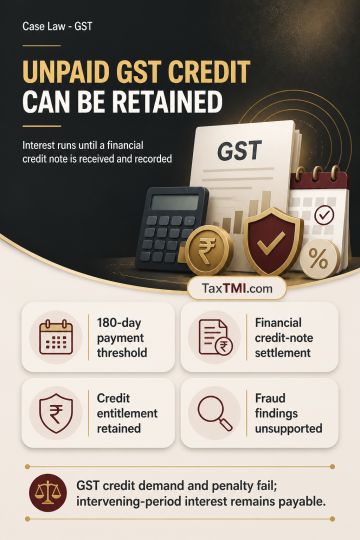
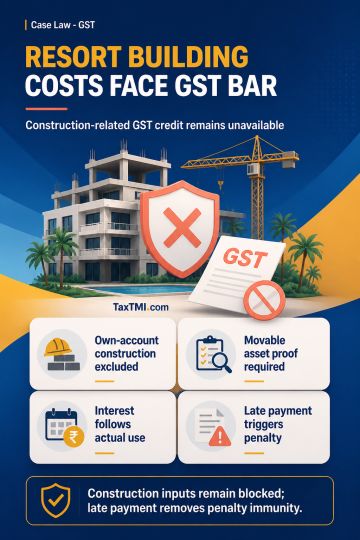
Blocked input tax credit for resort construction remains unavailable; interest follows actual utilisation, while delayed payment attracts statutory pe...
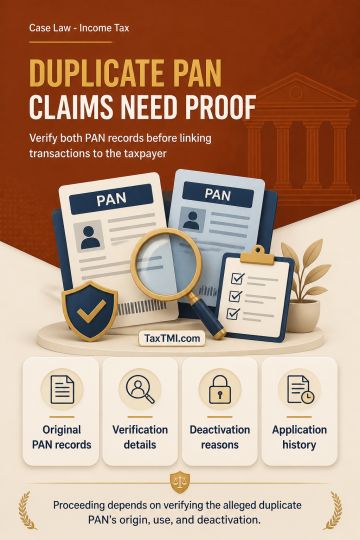
Duplicate PAN allocation requires record verification and deactivation reasons before assessment-related transactions can be attributed to an assessee...
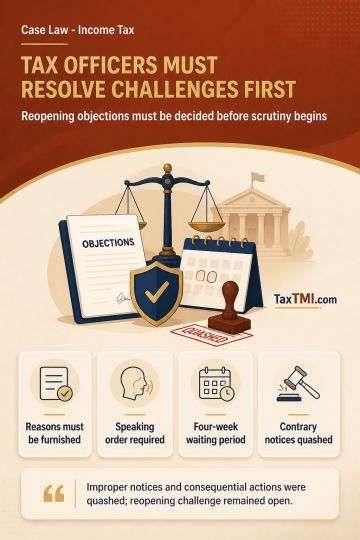
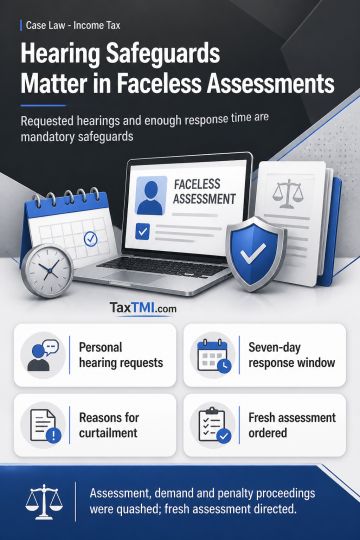
Faceless assessment safeguards require requested personal hearings and adequate final show-cause response time, failing which reassessment is required...
Clarification on TCS liability under section 52 of the DGST Act, 2017 in case of multiple E-commerce Operators in one transaction - The circular clarifies the TCS liability under section 52 of the DGST Act concerning transactions involving multiple ECOs. It distinguishes between scenarios where the supplier-side ECO is and isn't the direct supplier, attributing TCS compliance to the entity responsible for remitting payment to the supplier. In cases where the supplier-side ECO acts solely as a facilitator, it bears the TCS burden, whereas, when the supplier-side ECO is also the supplier, the buyer-side ECO assumes TCS collection responsibilities.
Clarification on TCS liability under section 52 of the DGST Act, 2017 in case of multiple E-commerce Operators in one transaction - The circular clarifies the TCS liability under section 52 of the DGST Act concerning transactions involving multiple ECOs. It distinguishes between scenarios where the supplier-side ECO is and isn't the direct supplier, attributing TCS compliance to the entity responsible for remitting payment to the supplier. In cases where the supplier-side ECO acts solely as a facilitator, it bears the TCS burden, whereas, when the supplier-side ECO is also the supplier, the buyer-side ECO assumes TCS collection responsibilities.
Note: It is a system-generated summary and is for quick reference only.
 TaxTMI
  TaxTMI
 of 4886