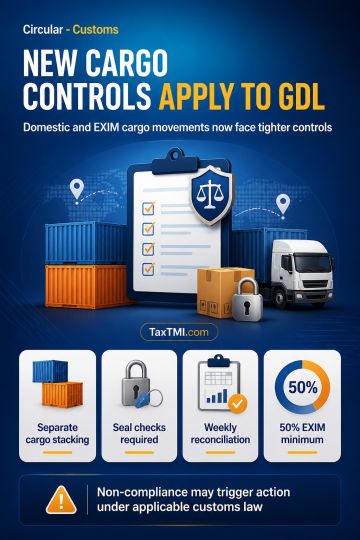
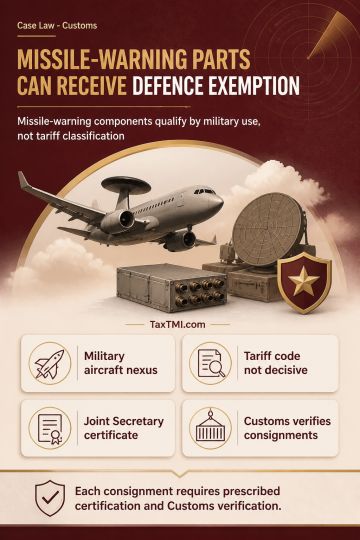
Customs-controlled cargo movement now includes GDL, subject to EXIM prioritisation, segregation, verification, reconciliation and enforcement safeguar...
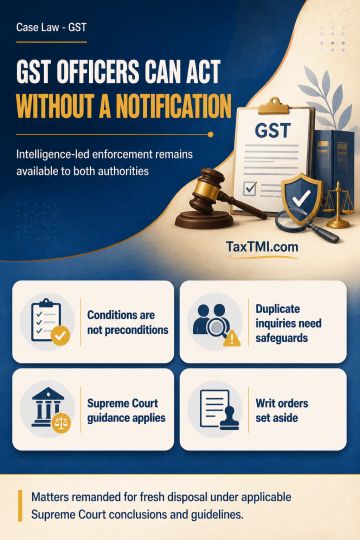
GST cross-empowerment remains effective without conditional notification, while duplicate proceedings require established safeguards against overlappi...
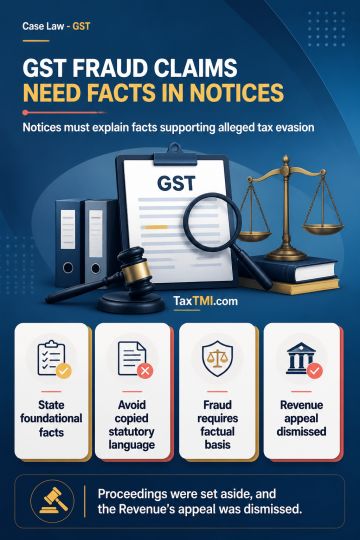
Levy of penalty equivalent to the tax on employees - wrongful utilization of Input Tax Credit - The High Court scrutinized the applicability of Sections 122(1A) and 137 of the CGST Act to the petitioners, emphasizing that these sections target "taxable persons" and entities responsible for the conduct of a company's business. It was determined that individual employees, who do not stand to personally benefit from the tax credits or evasion in question, do not fall within the scope of these sections as applied in the show cause notice. - It was clarified that the petitioners, in their capacity as employees, could not be deemed directly responsible for the alleged tax evasion merely based on their roles within the company, especially in the absence of concrete proof of their direct involvement or benefit from the evasion.
Levy of penalty equivalent to the tax on employees - wrongful utilization of Input Tax Credit - The High Court scrutinized the applicability of Sections 122(1A) and 137 of the CGST Act to the petitioners, emphasizing that these sections target "taxable persons" and entities responsible for the conduct of a company's business. It was determined that individual employees, who do not stand to personally benefit from the tax credits or evasion in question, do not fall within the scope of these sections as applied in the show cause notice. - It was clarified that the petitioners, in their capacity as employees, could not be deemed directly responsible for the alleged tax evasion merely based on their roles within the company, especially in the absence of concrete proof of their direct involvement or benefit from the evasion.
Note: It is a system-generated summary and is for quick reference only.
 TaxTMI
  TaxTMI
 of 4879