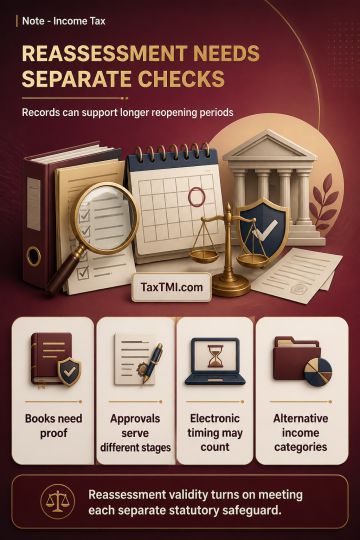
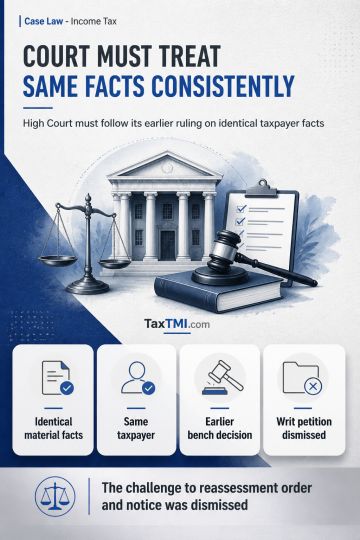
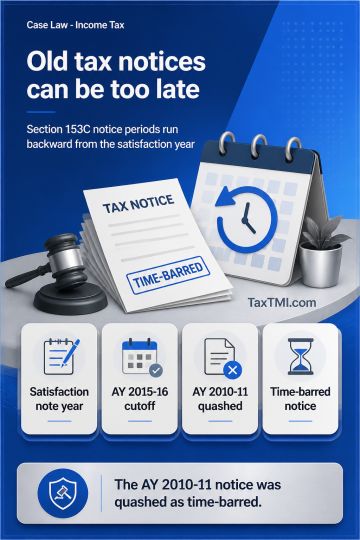
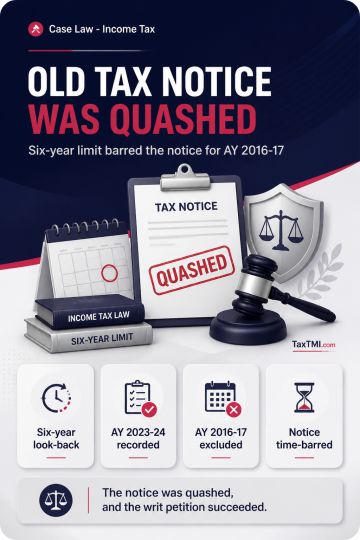
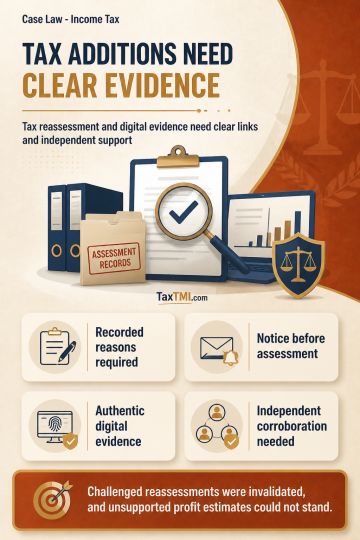
Judicial discipline requires consistent reassessment treatment where identical facts were decided for the same taxpayer in the preceding assessment ye...
Levy of penalty - goods were unloaded at a place that was not registered in the registration certificate - unloading goods at a location not specified in the e-way bill - The petitioner argues that the unloading occurred at their own registered godown, with no intent to evade tax. The court underscores the importance of establishing mens rea for penalty imposition, citing precedents. It distinguishes minor errors from major lapses and concludes that the minor typographical error in the e-way bill, coupled with the absence of intent to evade tax, renders the penalty unwarranted.
Levy of penalty - goods were unloaded at a place that was not registered in the registration certificate - unloading goods at a location not specified in the e-way bill - The petitioner argues that the unloading occurred at their own registered godown, with no intent to evade tax. The court underscores the importance of establishing mens rea for penalty imposition, citing precedents. It distinguishes minor errors from major lapses and concludes that the minor typographical error in the e-way bill, coupled with the absence of intent to evade tax, renders the penalty unwarranted.
Note: It is a system-generated summary and is for quick reference only.
 TaxTMI
  TaxTMI
 of 4888