Customs-controlled cargo movement now includes GDL, subject to EXIM prioritisation, segregation, verification, reconciliation and enforcement safeguar...
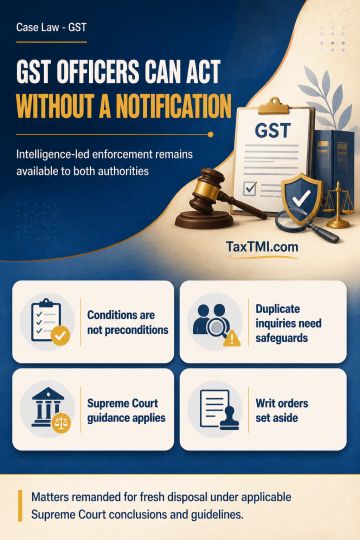
GST cross-empowerment remains effective without conditional notification, while duplicate proceedings require established safeguards against overlappi...
Validity of determination of tax under best judgment assessment - The petitioner challenged an ex-parte assessment order arguing that their statutory return in Form GSTR-3B for March 2023 was valid and should take precedence over the assessment order. They also contended that financial constraints prevented timely filing of the return, leading to a best judgment assessment. However, the petitioner failed to avail themselves of the statutory remedy of filing an appeal against the assessment within the prescribed period. The court, citing precedent, concluded that the writ petition was not maintainable due to the petitioner's failure to exhaust the statutory remedy of appeal. As a result, the court dismissed the petition.
Validity of determination of tax under best judgment assessment - The petitioner challenged an ex-parte assessment order arguing that their statutory return in Form GSTR-3B for March 2023 was valid and should take precedence over the assessment order. They also contended that financial constraints prevented timely filing of the return, leading to a best judgment assessment. However, the petitioner failed to avail themselves of the statutory remedy of filing an appeal against the assessment within the prescribed period. The court, citing precedent, concluded that the writ petition was not maintainable due to the petitioner's failure to exhaust the statutory remedy of appeal. As a result, the court dismissed the petition.
Note: It is a system-generated summary and is for quick reference only.
 TaxTMI
  TaxTMI
 of 4886