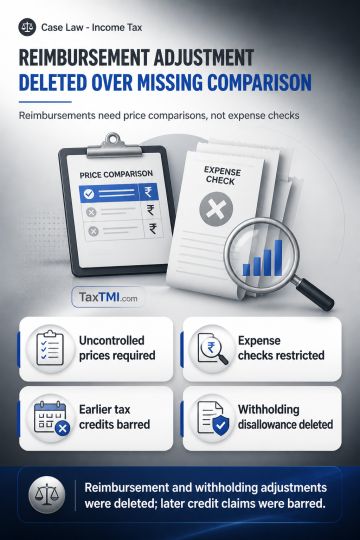
Transfer-pricing reimbursement adjustments require uncontrolled comparables and cannot become expense-genuineness reviews, resulting in deletion of th...
Food import sampling requirements support provisional release where unseized consignments conform to standards and raw areca classification is unestab...
Diagnostic microcuvette classification follows sole-use analytical function, placing specialised disposable cuvettes with their analyser rather than g...
Customs Broker licensing proceedings fail when their offence-report foundation collapses and authorisation, advisory, and KYC duties remain unbreached...
Page of 4891
Press 'Enter' after typing page number.
501 to 520 of 97820 Results
❮
❯
❯❯
0 / 200
Expand Note
Add to Folder
No Folders have been created
+
Are you sure you want to delete "My most important" ?
Levy of penalties u/s 271D and 271E for the violation of sections 269SS and 269T, respectively - The Tribunal, after reviewing precedents from the Supreme Court and various High Courts, emphasized that recording satisfaction in the assessment order regarding the initiation of penalty proceedings is mandatory. It was found that the AO had not recorded such satisfaction, rendering the penalty proceedings under sections 271D and 271E invalid. - Regarding period of limitation, the Tribunal noted that the reference for initiating penalty proceedings made by the AO to the Additional Commissioner was beyond the statutory limitation period. Therefore, the penalties imposed were considered time-barred and legally unsustainable.
Levy of penalties u/s 271D and 271E for the violation of sections 269SS and 269T, respectively - The Tribunal, after reviewing precedents from the Supreme Court and various High Courts, emphasized that recording satisfaction in the assessment order regarding the initiation of penalty proceedings is mandatory. It was found that the AO had not recorded such satisfaction, rendering the penalty proceedings under sections 271D and 271E invalid. - Regarding period of limitation, the Tribunal noted that the reference for initiating penalty proceedings made by the AO to the Additional Commissioner was beyond the statutory limitation period. Therefore, the penalties imposed were considered time-barred and legally unsustainable.
Note: It is a system-generated summary and is for quick reference only.
 TaxTMI
  TaxTMI
 of 4891