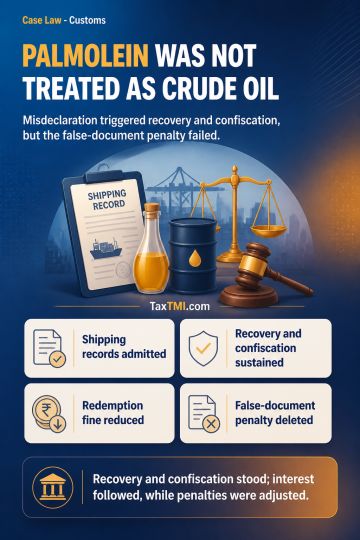
Palmolein classification defeated the crude-oil concession; material misdeclaration sustained recovery and confiscation, while separate false-document...
Refund including cash refund of DEPB/FPS scrips - principles of unjust enrichment - The Tribunal examined the facts surrounding the refund claims and acknowledged the respondent's reliance on the London Metal Exchange (LME) for pricing. They found that the price of the final products was determined based on LME prices, which were beyond the control of the respondent. - The CESTAT concluded that the principle of unjust enrichment did not apply in this case. They emphasized that the final product prices were based on LME prices, and there was no evidence of the duty burden being passed on to buyers.
Refund including cash refund of DEPB/FPS scrips - principles of unjust enrichment - The Tribunal examined the facts surrounding the refund claims and acknowledged the respondent's reliance on the London Metal Exchange (LME) for pricing. They found that the price of the final products was determined based on LME prices, which were beyond the control of the respondent. - The CESTAT concluded that the principle of unjust enrichment did not apply in this case. They emphasized that the final product prices were based on LME prices, and there was no evidence of the duty burden being passed on to buyers.
Note: It is a system-generated summary and is for quick reference only.
 TaxTMI
  TaxTMI
 of 4894