Additional evidence in departmental appeals may include show-cause-notice material without introducing a new case where it merely corroborates existin...
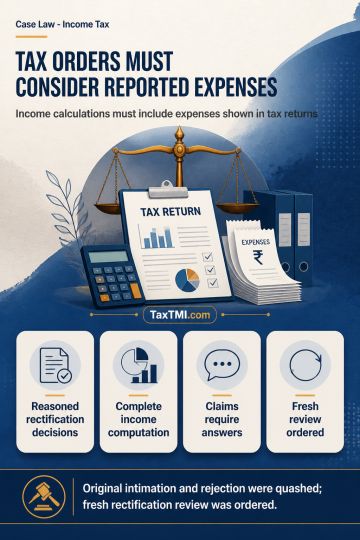
Reasoned rectification orders require consideration of expenditure disclosed in income-tax returns, preventing revision based on incomplete income com...
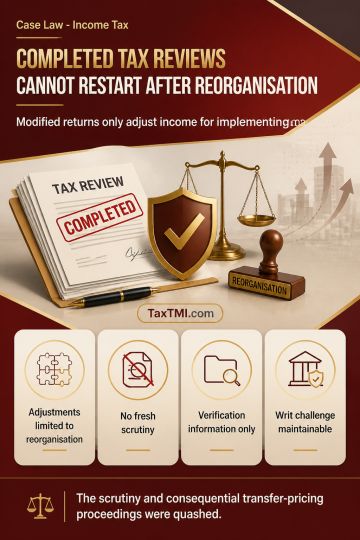
Modified returns after business reorganisations cannot trigger fresh scrutiny once the original assessment was complete, invalidating related transfer...
Third-party loose sheets require reliable nexus before supporting unexplained expenditure additions; presumptions do not establish payer identity or o...
TNMM comparability using audited accounts and working-capital adjustments can eliminate unwarranted transfer-pricing additions where verified margins ...
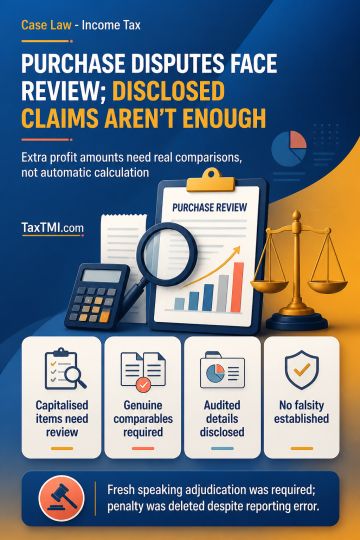
Gross-profit additions on disputed purchases require reasoned appellate determination; disclosed claims alone do not support inaccurate-particulars pe...
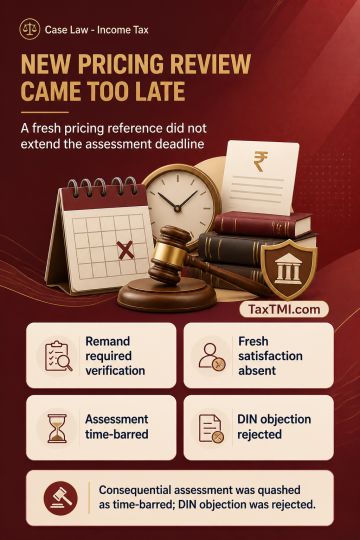
Limitation after transfer-pricing remand: fresh TPO reference did not extend the assessment deadline, rendering the consequential assessment time-barr...
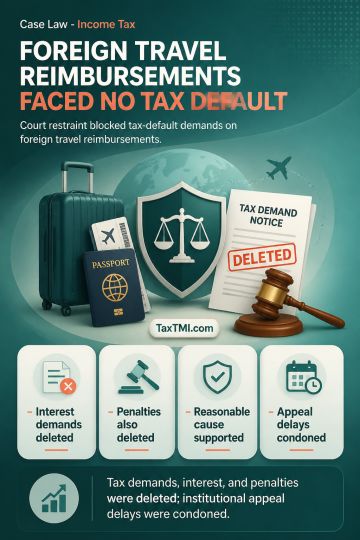
Interim judicial restraint on tax deduction prevents default, while supporting reasonable cause and penalty deletion for foreign-leg LFC reimbursement...
Customs Duty concession to EVs imported under of the Ministry of Heavy Industries' Scheme - The introduction of a specific customs duty rate of 15% for EVs imported under the new scheme encourages the import and manufacturing of electric passenger cars in India. This aligns with India's goals for environmental sustainability and the promotion of cleaner, greener transportation alternatives. - The conditional exemption, bound by compliance with the 'Scheme to promote manufacturing of electric passenger cars in India', introduces a structured approach to support the domestic manufacturing of electric vehicles. By setting a deadline of 31st March 2031, it also indicates a transition period towards more sustainable transportation solutions.
Customs Duty concession to EVs imported under of the Ministry of Heavy Industries' Scheme - The introduction of a specific customs duty rate of 15% for EVs imported under the new scheme encourages the import and manufacturing of electric passenger cars in India. This aligns with India's goals for environmental sustainability and the promotion of cleaner, greener transportation alternatives. - The conditional exemption, bound by compliance with the 'Scheme to promote manufacturing of electric passenger cars in India', introduces a structured approach to support the domestic manufacturing of electric vehicles. By setting a deadline of 31st March 2031, it also indicates a transition period towards more sustainable transportation solutions.
Note: It is a system-generated summary and is for quick reference only.
 TaxTMI
  TaxTMI
 of 4894