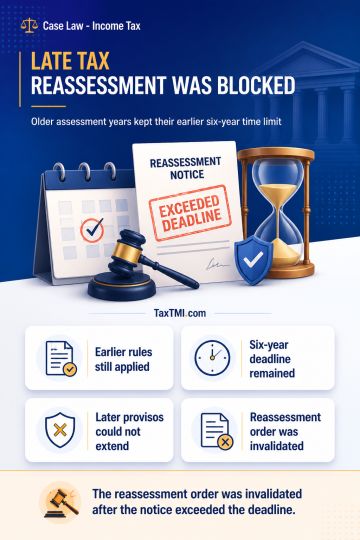
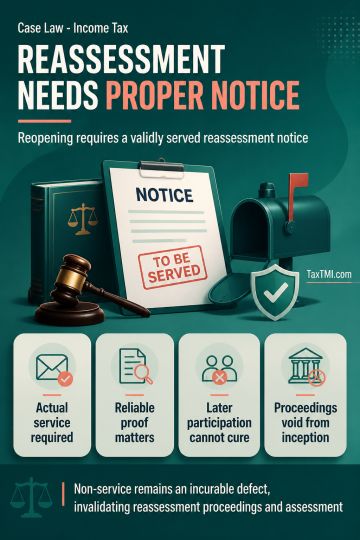
Pre-amendment reassessment limitation bars late notices under the preserved regime, invalidating consequential reassessment for affected earlier asses...
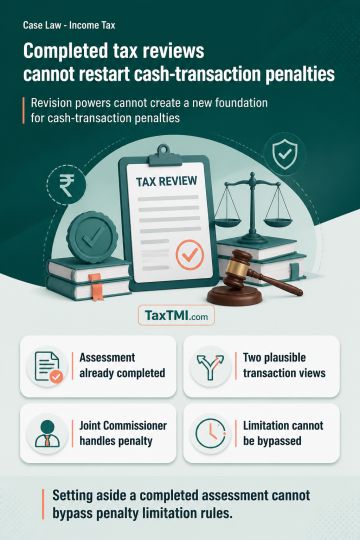
Cash-sales explanations for bank deposits require documentary reconciliation; reassessment notice survived where effective response time was available...
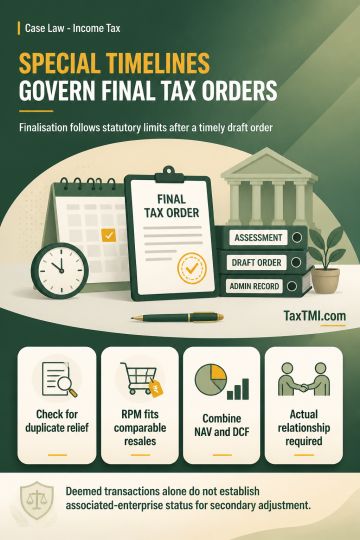
Functional comparability in transfer pricing prevents ad hoc arm's length adjustments where functions, assets, risks and reliable comparables are unes...
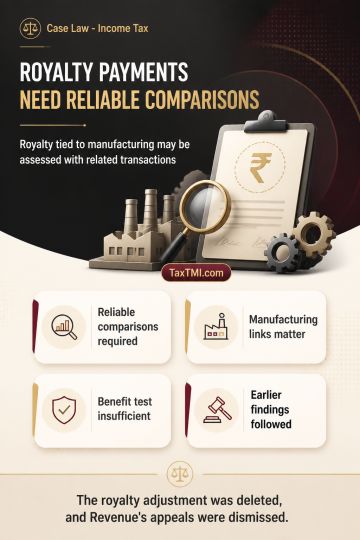
Contingency expenses, exempt-income disallowance, and royalty benchmarking: unsupported adjustments were deleted under consistent accounting and trans...
Page of 4920
Press 'Enter' after typing page number.
61 to 80 of 98394 Results
❮
❯
❯❯
0 / 200
Expand Note
Add to Folder
No Folders have been created
+
Are you sure you want to delete "My most important" ?
Seeking waiving off the payment of Court fees - economic hardship or other significant reasons - Refiling the Compensation Application against the order of the Competition Commission of India - The NCLAT found no such hardship or reason was presented that justified waiving the fee, despite the appellant's claim of being misled by their previous representative. - The NCLAT distinguished these cases from the present situation, noting that in those cases, the legal representatives' absence or default led to the proceedings' outcomes. In contrast, in the current case, the representative was present and actively participated, even though he was not authorized to practice law. Thus, the rationale of not penalizing the party for the representative's fault did not apply here as the representative's actions were not mere defaults or absences but involved active, albeit unauthorized, participation.
Seeking waiving off the payment of Court fees - economic hardship or other significant reasons - Refiling the Compensation Application against the order of the Competition Commission of India - The NCLAT found no such hardship or reason was presented that justified waiving the fee, despite the appellant's claim of being misled by their previous representative. - The NCLAT distinguished these cases from the present situation, noting that in those cases, the legal representatives' absence or default led to the proceedings' outcomes. In contrast, in the current case, the representative was present and actively participated, even though he was not authorized to practice law. Thus, the rationale of not penalizing the party for the representative's fault did not apply here as the representative's actions were not mere defaults or absences but involved active, albeit unauthorized, participation.
Note: It is a system-generated summary and is for quick reference only.
 TaxTMI
 TaxTMI

 of 4920