Electronic certificates of origin enable preferential tariffs under the India-New Zealand FTA when format, verification, and filing requirements are m...
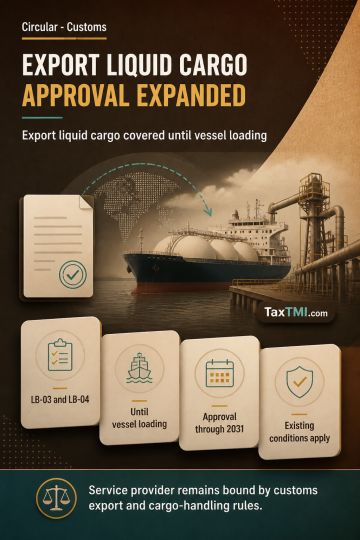
Customs approval for liquid cargo exports extends designated jetty operations while existing boarding station and customs area limits remain unchanged...
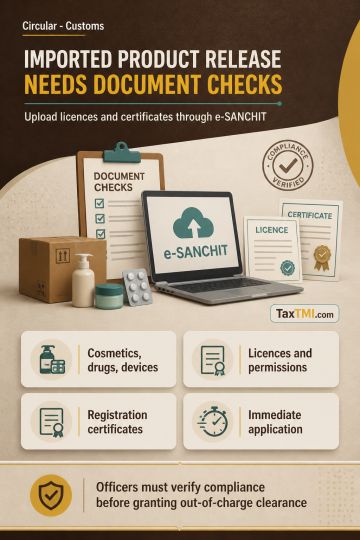
Mandatory compliance document verification now conditions out-of-charge clearance for imported cosmetics, drugs, and medical devices through PGA-facil...
Double taxation of turnover requires holistic verification across separately registered units and permits limited rectification of overlapping assessm...
Wilful misdeclaration or suppression of facts - benefit of Merchandise Export from India Scheme (MEIS) - Export of various frozen seafood - exporting goods as ‘Frozen Leather Jacket Fish’ - The Tribunal noted that the appellant's classification of the product under the contested HSN code was based on a legitimate interpretation and that the customs had accepted this classification at the time of export. The reclassification by the department after issuing a Public Notice could not retroactively invalidate the appellant's eligibility for MEIS benefits. - The Tribunal also addressed the legal validity of the MEIS scrips obtained based on the exports under dispute, concluding that if the scrips were deemed valid for the importers, they must also be considered valid for the exporter (the appellant).
Wilful misdeclaration or suppression of facts - benefit of Merchandise Export from India Scheme (MEIS) - Export of various frozen seafood - exporting goods as ‘Frozen Leather Jacket Fish’ - The Tribunal noted that the appellant's classification of the product under the contested HSN code was based on a legitimate interpretation and that the customs had accepted this classification at the time of export. The reclassification by the department after issuing a Public Notice could not retroactively invalidate the appellant's eligibility for MEIS benefits. - The Tribunal also addressed the legal validity of the MEIS scrips obtained based on the exports under dispute, concluding that if the scrips were deemed valid for the importers, they must also be considered valid for the exporter (the appellant).
Note: It is a system-generated summary and is for quick reference only.
 TaxTMI
 TaxTMI