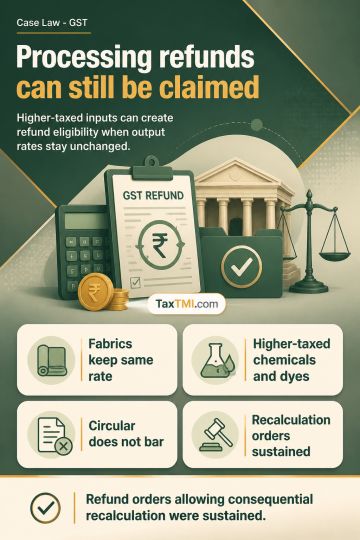
Credit-note turnover adjustments preserve inverted-duty refunds, while ministerial re-computation does not constitute an impermissible appellate reman...
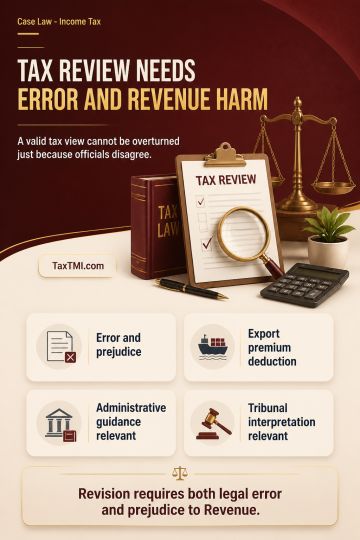
Revisional jurisdiction over export quota premium deductions requires both error and Revenue prejudice; a permissible assessment view cannot be displa...
Contempt application preferred by the appellant alleging non-compliance of order passed by the learned Single Judge of the High Court - entitlement to refund of the excess payment made by the petitioner - The Supreme Court held that, the learned Single Judge was not justified in discharging the respondents in the contempt case without ensuring payment of the refund amount with interest to the appellant herein. - The Court grants relief to the appellant, directing the respondents to refund the excess amount paid with interest at the rate of 12% per annum for specified periods, and imposes a deadline for compliance with the order.
Contempt application preferred by the appellant alleging non-compliance of order passed by the learned Single Judge of the High Court - entitlement to refund of the excess payment made by the petitioner - The Supreme Court held that, the learned Single Judge was not justified in discharging the respondents in the contempt case without ensuring payment of the refund amount with interest to the appellant herein. - The Court grants relief to the appellant, directing the respondents to refund the excess amount paid with interest at the rate of 12% per annum for specified periods, and imposes a deadline for compliance with the order.
Note: It is a system-generated summary and is for quick reference only.
 TaxTMI
  TaxTMI
 of 4888