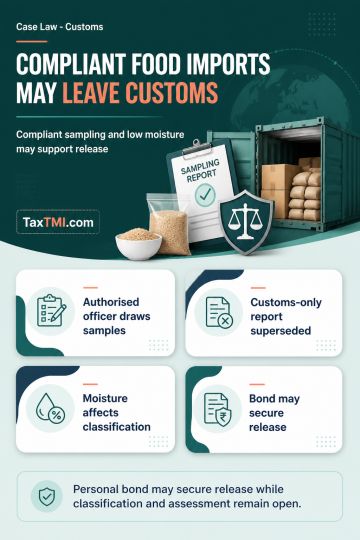
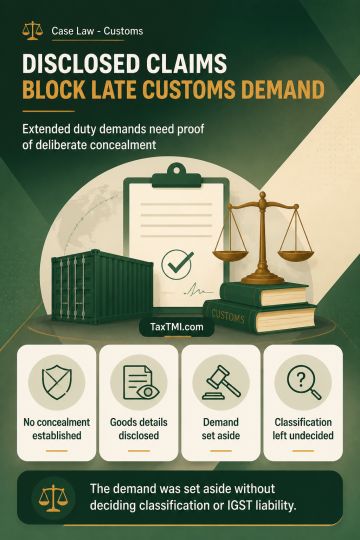
Food import sampling requirements support provisional release where unseized consignments conform to standards and raw areca classification is unestab...
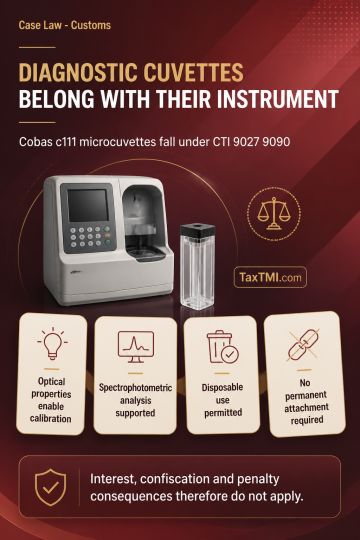
Diagnostic microcuvette classification follows sole-use analytical function, placing specialised disposable cuvettes with their analyser rather than g...
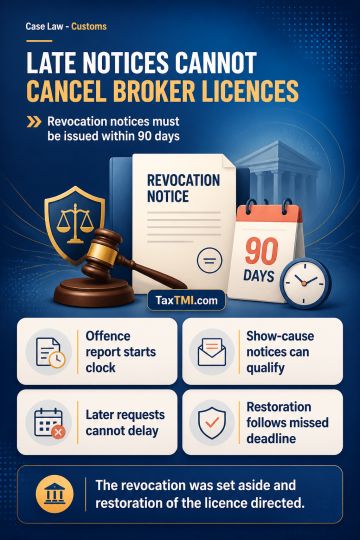
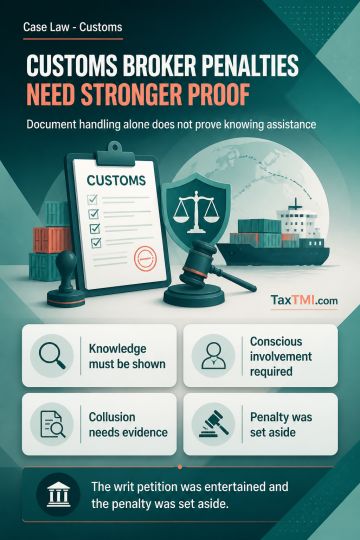
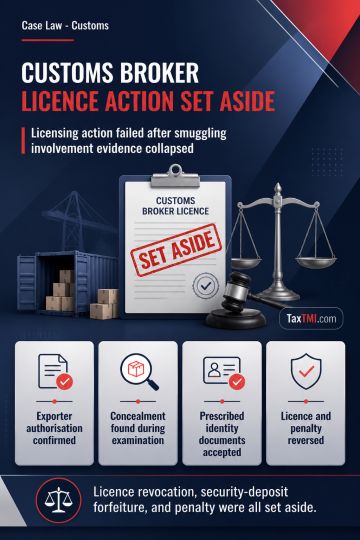
Customs Broker licensing proceedings fail when their offence-report foundation collapses and authorisation, advisory, and KYC duties remain unbreached...
Access to Technology in Courts - Hearings through hybrid mode or video conferencing - Lack of Uniformity - Infrastructure and Connectivity - The Supreme Court held that, the use of technology by the Bar and the Bench is no longer an option but a necessity. Members of the Bench, the Bar and the litigants must aid each other to create a technologically adept and friendly environment. - The court issued a series of directions aimed at addressing the identified issues and ensuring the effective implementation of technology in court proceedings.
Access to Technology in Courts - Hearings through hybrid mode or video conferencing - Lack of Uniformity - Infrastructure and Connectivity - The Supreme Court held that, the use of technology by the Bar and the Bench is no longer an option but a necessity. Members of the Bench, the Bar and the litigants must aid each other to create a technologically adept and friendly environment. - The court issued a series of directions aimed at addressing the identified issues and ensuring the effective implementation of technology in court proceedings.
Note: It is a system-generated summary and is for quick reference only.
 TaxTMI
  TaxTMI
 of 4881