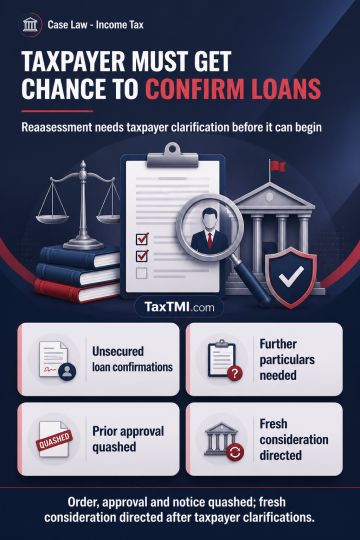
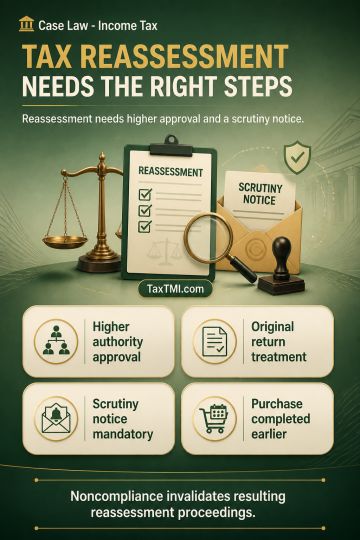
Opportunity to furnish unsecured-loan confirmations is required before reassessment initiation; proceedings require fresh consideration after taxpayer...
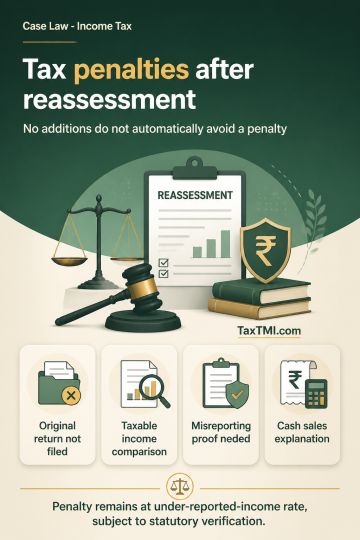
Under-reporting on a first reassessment return attracts penalty, while enhanced misreporting penalty requires proof of a statutory misreporting catego...
Classification of services - reverse charge mechanism (RCM) - Banking and Financial Services - A negative test may also be of help in deciding the issue involved. If the launch offering and sale of the FCCB abroad fails on the very first day, it is the Appellant who will feel the direct pinch of any deficiency in service from Barclays UK or for any other reasons and not the investors or any third party. As per the agreement Barclays UK will still be eligible for their fee calculated as a percentage of the gross proceeds received in respect of the issue of the FCCB from the Appellant. Hence the services provided from outside India by Barclays UK is received by the Appellant in India with a reverse flow of consideration for the said activity and the service is exigible to tax under the Reverse Charge Mechanism as per section 66A(1) of FA 1994.
Classification of services - reverse charge mechanism (RCM) - Banking and Financial Services - A negative test may also be of help in deciding the issue involved. If the launch offering and sale of the FCCB abroad fails on the very first day, it is the Appellant who will feel the direct pinch of any deficiency in service from Barclays UK or for any other reasons and not the investors or any third party. As per the agreement Barclays UK will still be eligible for their fee calculated as a percentage of the gross proceeds received in respect of the issue of the FCCB from the Appellant. Hence the services provided from outside India by Barclays UK is received by the Appellant in India with a reverse flow of consideration for the said activity and the service is exigible to tax under the Reverse Charge Mechanism as per section 66A(1) of FA 1994.
Note: It is a system-generated summary and is for quick reference only.
 TaxTMI
  TaxTMI
 of 4915