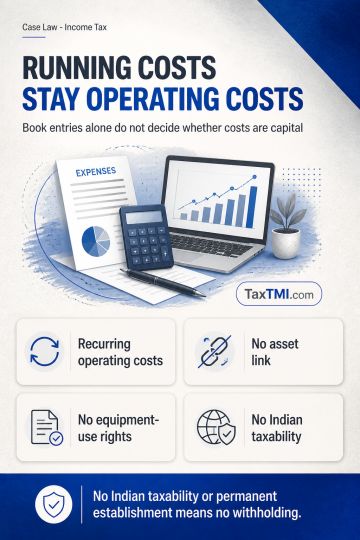
Business expenditure and depreciation rules allow operational outgoings while limiting disallowances for personal elements and unsupported third-party...
Compromise-and-arrangement extensions may accommodate debt assignment where creditor commercial judgment supports value maximisation and avoids proced...
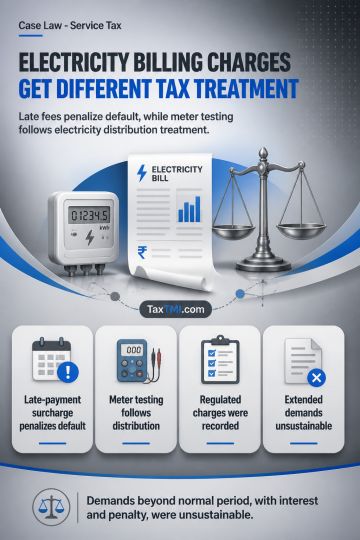
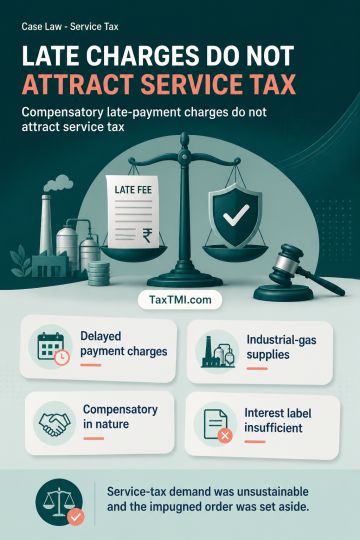
Delayed-payment surcharge is not taxable tolerance consideration where it penalises default, while meter testing follows electricity distribution trea...
Sufficient cause for delayed revenue income-tax appeals requires bona fides, due diligence and a credible explanation; otherwise limitation bars appea...
Page of 4897
Press 'Enter' after typing page number.
1081 to 1100 of 97923 Results
❮
❯
❯❯
0 / 200
Expand Note
Add to Folder
No Folders have been created
+
Are you sure you want to delete "My most important" ?
Refund of accumulated Credit - transition to GST regime - the appellant is entitled to refund under the provisions of Section 142(3) of CGST Act, which provides that assessee can file refund claim on or after the appointed day, for refund of any amount of credit of duty, etc. paid under the existing law (Central Excise/Service Tax), subject to clearing the bar of unjust enrichment. Further, the bar of limitation has been waived under Section 142 (3). - AT
Refund of accumulated Credit - transition to GST regime - the appellant is entitled to refund under the provisions of Section 142(3) of CGST Act, which provides that assessee can file refund claim on or after the appointed day, for refund of any amount of credit of duty, etc. paid under the existing law (Central Excise/Service Tax), subject to clearing the bar of unjust enrichment. Further, the bar of limitation has been waived under Section 142 (3). - AT
Note: It is a system-generated summary and is for quick reference only.
 TaxTMI
  TaxTMI
 of 4897