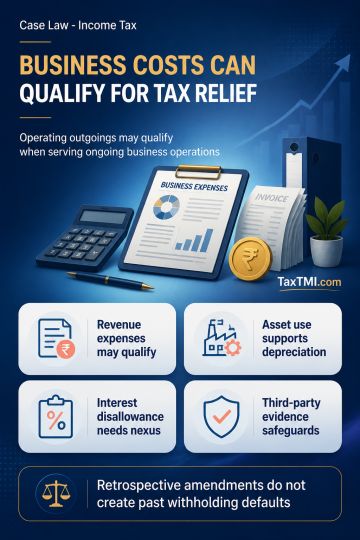
Business expenditure and depreciation rules allow operational outgoings while limiting disallowances for personal elements and unsupported third-party...
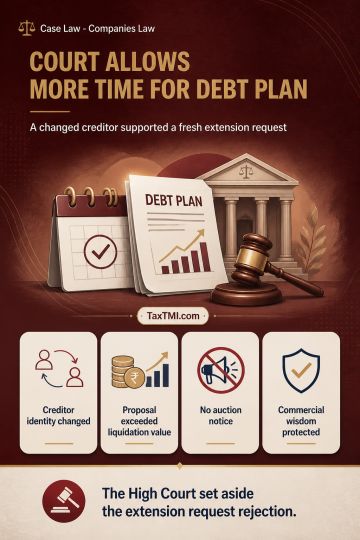
Compromise-and-arrangement extensions may accommodate debt assignment where creditor commercial judgment supports value maximisation and avoids proced...
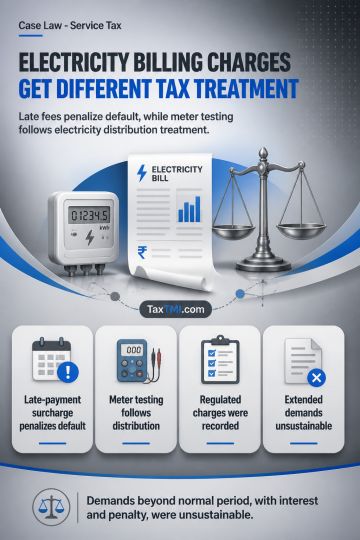
Delayed-payment surcharge is not taxable tolerance consideration where it penalises default, while meter testing follows electricity distribution trea...
Sufficient cause for delayed revenue income-tax appeals requires bona fides, due diligence and a credible explanation; otherwise limitation bars appea...
Power to CIT(A) to set aside the order and remand back to AO - CIT(A) has only directed the AO to determine the actual distance based on these findings and then accordingly deal with the adjustment to be made. There is clearly a difference between setting aside an issue to the A.O., which power the Ld. CIT(A) does not have as per Section 251 of the Act, and giving directions to the AO. An issue set aside to the AO is left for adjudication to him, while in a case giving directions, the issue is restored to the AO only for acting on the adjudication done by the CIT(A). - AT
Power to CIT(A) to set aside the order and remand back to AO - CIT(A) has only directed the AO to determine the actual distance based on these findings and then accordingly deal with the adjustment to be made. There is clearly a difference between setting aside an issue to the A.O., which power the Ld. CIT(A) does not have as per Section 251 of the Act, and giving directions to the AO. An issue set aside to the AO is left for adjudication to him, while in a case giving directions, the issue is restored to the AO only for acting on the adjudication done by the CIT(A). - AT
Note: It is a system-generated summary and is for quick reference only.
 TaxTMI
  TaxTMI
 of 4891