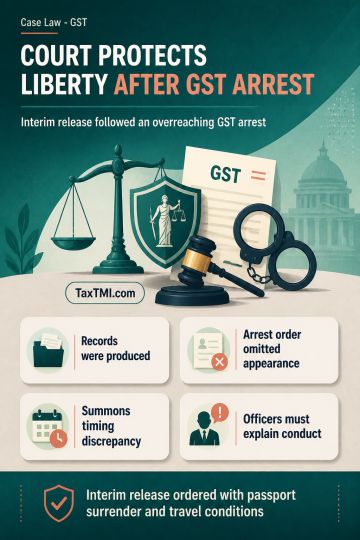
Personal liberty safeguards restrict arrest after court-directed GST appearance, requiring interim release where authorities overreach pending proceed...
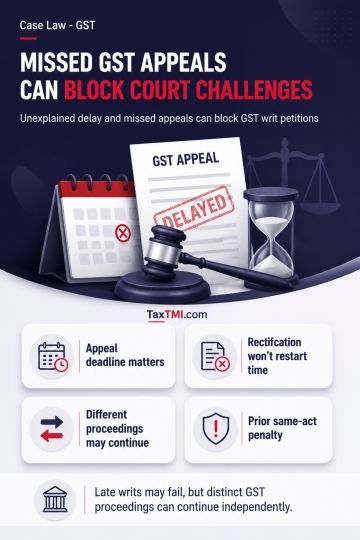
Alternative statutory remedy and delay bar GST writ challenges despite pending rectification, while distinct subject matter permits parallel proceedin...
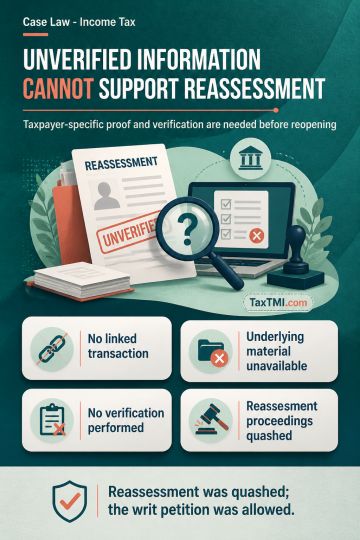
Unverified Insight Portal Information Cannot Justify Reassessment Without a Verified Taxpayer-Specific Income-Escape Nexus or Demonstrated Application...
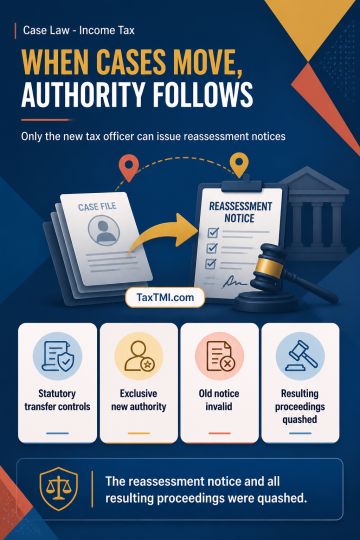
Assessing Officer jurisdiction after statutory transfer invalidates reassessment notices issued by transferor officers and nullifies resulting proceed...
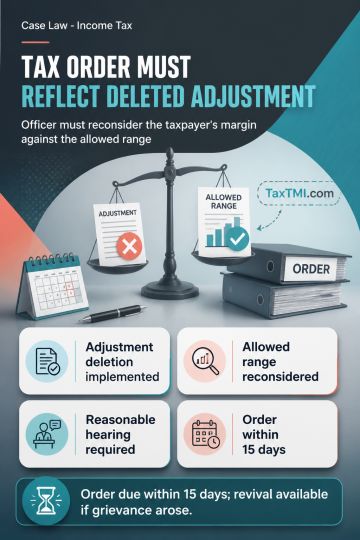
Consequential appeal-effect orders must implement rectification deleting working-capital adjustments and reconsider the resulting arm's-length range c...
Levy of IGST - Scope and power of state legislature versus GST Council - The recommendations of the GST Council are not binding on the Union and States - Neither does Article 279A begin with a non-obstante clause nor does Article 246A state that it is subject to the provisions of Article 279A. The Parliament and the State legislatures possess simultaneous power to legislate on GST. Article 246A does not envisage a repugnancy provision to resolve the inconsistencies between the Central and the State laws on GST. The ‘recommendations’ of the GST Council are the product of a collaborative dialogue involving the Union and States. They are recommendatory in nature. To regard them as binding edicts would disrupt fiscal federalism, where both the Union and the States are conferred equal power to legislate on GST. - SC
Levy of IGST - Scope and power of state legislature versus GST Council - The recommendations of the GST Council are not binding on the Union and States - Neither does Article 279A begin with a non-obstante clause nor does Article 246A state that it is subject to the provisions of Article 279A. The Parliament and the State legislatures possess simultaneous power to legislate on GST. Article 246A does not envisage a repugnancy provision to resolve the inconsistencies between the Central and the State laws on GST. The ‘recommendations’ of the GST Council are the product of a collaborative dialogue involving the Union and States. They are recommendatory in nature. To regard them as binding edicts would disrupt fiscal federalism, where both the Union and the States are conferred equal power to legislate on GST. - SC
Note: It is a system-generated summary and is for quick reference only.
 TaxTMI
  TaxTMI
 of 4879