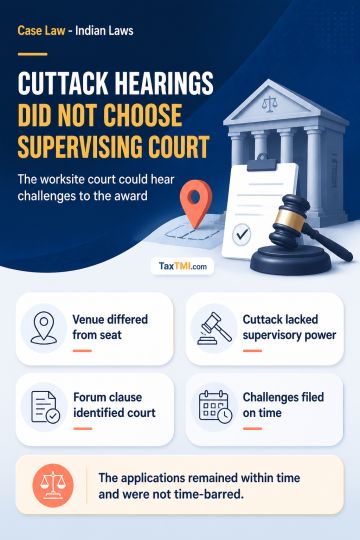
Juridical seat versus arbitral venue determines supervisory court jurisdiction, while timely award challenges remain within the prescribed limitation ...
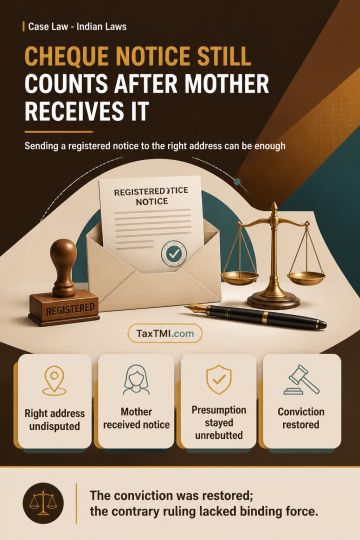
Dishonor of Cheque - Insufficient Funds - Since, the drawer of the cheque was the accused Company, solely on the ground that the respondent had signed the cheque, a liability under Section 138 of the NI Act did not arise against him. The complaint was prima facie not maintainable against the Company as drawer of the cheque, the liability towards the respondent also did not arise keeping in view that respondent was acting on behalf of the Company and where the liability against the Company had been discharged, a private and severed liability against the respondent could not have arisen in the circumstances of the instant matter - HC
Dishonor of Cheque - Insufficient Funds - Since, the drawer of the cheque was the accused Company, solely on the ground that the respondent had signed the cheque, a liability under Section 138 of the NI Act did not arise against him. The complaint was prima facie not maintainable against the Company as drawer of the cheque, the liability towards the respondent also did not arise keeping in view that respondent was acting on behalf of the Company and where the liability against the Company had been discharged, a private and severed liability against the respondent could not have arisen in the circumstances of the instant matter - HC
Note: It is a system-generated summary and is for quick reference only.
 TaxTMI
  TaxTMI
 of 4886