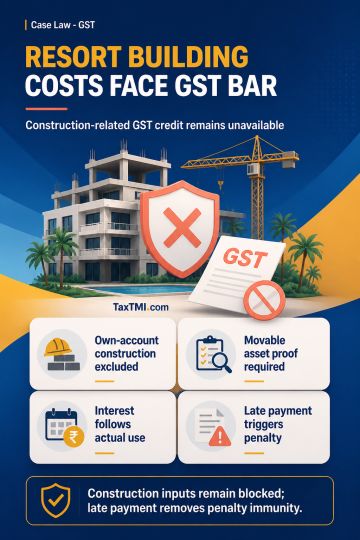
Blocked input tax credit for resort construction remains unavailable; interest follows actual utilisation, while delayed payment attracts statutory pe...
Duplicate PAN allocation requires record verification and deactivation reasons before assessment-related transactions can be attributed to an assessee...
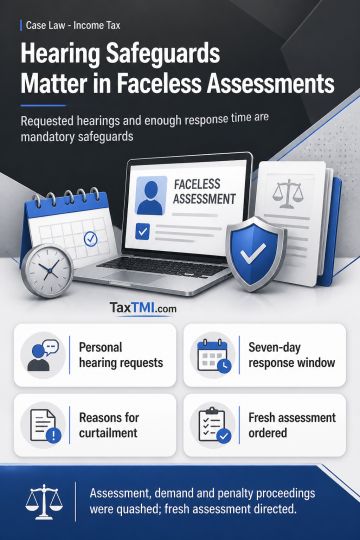
Faceless assessment safeguards require requested personal hearings and adequate final show-cause response time, failing which reassessment is required...
Addition u/s 56 (2) (viib) - issue of shares that exceeds the face value - Both these methods have different approaches and methodologies therefore there are bound to be differences, but it does not give any authority to the learned assessing officer to pick and choose one of the method and make the addition. It is the assessee who has to exercise one of the options available under the provisions of the law for valuing the shares. The learned assessing officer needs to examine that method. Naturally, if the discounted cash flow method and net asset value method gives the same result, where would have been the need to prescribe the two methods in the law. - AT
Addition u/s 56 (2) (viib) - issue of shares that exceeds the face value - Both these methods have different approaches and methodologies therefore there are bound to be differences, but it does not give any authority to the learned assessing officer to pick and choose one of the method and make the addition. It is the assessee who has to exercise one of the options available under the provisions of the law for valuing the shares. The learned assessing officer needs to examine that method. Naturally, if the discounted cash flow method and net asset value method gives the same result, where would have been the need to prescribe the two methods in the law. - AT
Note: It is a system-generated summary and is for quick reference only.
 TaxTMI
  TaxTMI