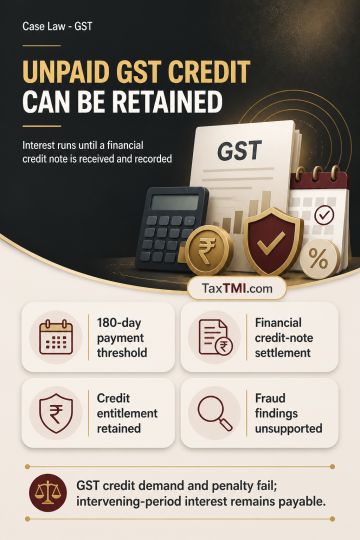
Blocked input tax credit for resort construction remains unavailable; interest follows actual utilisation, while delayed payment attracts statutory pe...
Duplicate PAN allocation requires record verification and deactivation reasons before assessment-related transactions can be attributed to an assessee...
Faceless assessment safeguards require requested personal hearings and adequate final show-cause response time, failing which reassessment is required...
Revision u/s 263 - assessment order as contrary to the draft assessment order - The remedy against unjust disallowances, on merits, lies in the appellate process and not in review by the Assessing Officer on his own. In our considered view, an Assessing Officer cannot revisit his conclusions at the stage of passing the final order under section 144C(3). - The order of the Assessing Officer was thus clearly erroneous as also prejudicial to the interest of the assessee, and the learned PCIT was indeed justified in assuming the powers under section 263 on the facts of this case - AT
Revision u/s 263 - assessment order as contrary to the draft assessment order - The remedy against unjust disallowances, on merits, lies in the appellate process and not in review by the Assessing Officer on his own. In our considered view, an Assessing Officer cannot revisit his conclusions at the stage of passing the final order under section 144C(3). - The order of the Assessing Officer was thus clearly erroneous as also prejudicial to the interest of the assessee, and the learned PCIT was indeed justified in assuming the powers under section 263 on the facts of this case - AT
Note: It is a system-generated summary and is for quick reference only.
 TaxTMI
  TaxTMI
 of 4888