Explained Investment Sources: documented gifts and traceable salary savings supported deletion of additions for property and mutual-fund SIP investmen...
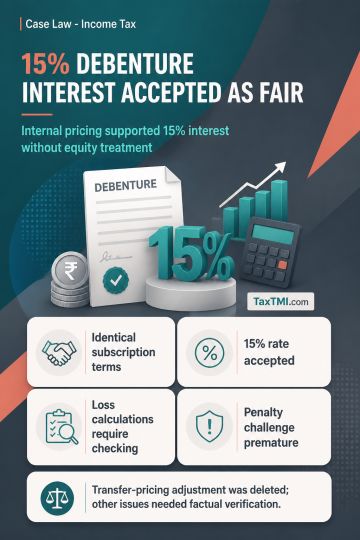
Internal comparable pricing supports arm's-length interest on compulsorily convertible debentures, preventing their recharacterisation as equity for t...
Nominee director protection shields independent financial-institution appointees from criminal liability where they lack involvement in deposit defaul...
Assessment of Trust - voluntary corpus donations - Whether the assessee is a discretionary Trust - Additions u/s Section 56(2)(vii) read with Section 2(24)(iva) - AOP u/s 2(31)(v) - The assessee is required to be assessed as an “individual”, the beneficiaries have been identified and are identifiable and Section 161 would apply because the income is specifically receivable on behalf of or for the benefit of any one person who are known and whose shares are determinate. The factual positions as brought by the JCIT and the CIT clearly show that the methodology adopted by the assessee was to circumvent the provisions of the Act. - HC
Assessment of Trust - voluntary corpus donations - Whether the assessee is a discretionary Trust - Additions u/s Section 56(2)(vii) read with Section 2(24)(iva) - AOP u/s 2(31)(v) - The assessee is required to be assessed as an “individual”, the beneficiaries have been identified and are identifiable and Section 161 would apply because the income is specifically receivable on behalf of or for the benefit of any one person who are known and whose shares are determinate. The factual positions as brought by the JCIT and the CIT clearly show that the methodology adopted by the assessee was to circumvent the provisions of the Act. - HC
Note: It is a system-generated summary and is for quick reference only.
 TaxTMI
  TaxTMI
 of 4886