Cost-to-cost reimbursement of seconded employees is not service consideration; transfer-pricing markup was deleted and amalgamation amortisation allow...
Crystallisation of liability supports prior-period expense deduction, while functionally distinct divisions require separate transfer-pricing benchmar...
Functional comparability under TNMM requires transaction-specific FAR analysis before benchmarking business-support services provided to associated en...
Advance pricing agreement methodology can guide benchmarking for non-covered years when functions, assets, risks and activities remain materially unch...
Tax-audit exemption for substantially State-funded educational universities prevents audit-failure penalties where income qualifies for statutory exem...
Functional, asset and risk analysis excludes diversified technology companies from captive software development comparables under cost-plus arrangemen...
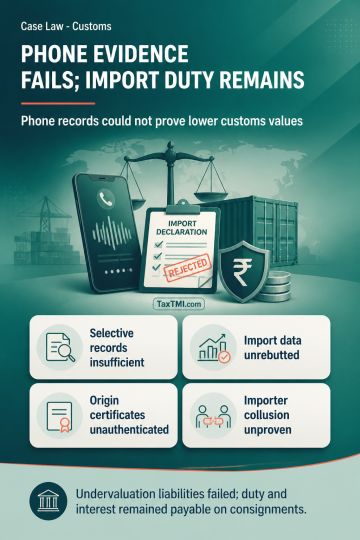
Mobile-phone electronic evidence failed to establish customs undervaluation, while duty survived on non-authentic origin certificates without importer...
Cost-to-cost recovery of salary and travel expenses for...
Cost-to-cost reimbursement of seconded employees is not service consideration; transfer-pricing markup was deleted and amalgamation amortisation allowed.
Contents
Summary
Note
Bookmark
Share
✓ Copied successfully !
Print
Print Options
For full text, please login
Login to TaxTMI
Verification Pending
The Email Id has not been verified. Click on the link we have sent on
Cost-to-cost recovery of salary and travel expenses for employees temporarily seconded to associated enterprises constitutes expense reimbursement rather than consideration for margin-bearing services where recovered exactly at cost. Accordingly, the transfer-pricing mark-up adjustment was deleted, supported by consistent treatment in other years and a bilateral Advance Pricing Agreement allowing recovery at cost. Amalgamation expenditure incurred after approval is amortised over five years beginning in the assessment year relevant to the year of expenditure, not the appointed amalgamation date. The fifth annual deduction was allowed because the claim had been accepted for the prior four years without changed facts.
Cost-to-cost recovery of salary and travel expenses for employees temporarily seconded to associated enterprises constitutes expense reimbursement rather than consideration for margin-bearing services where recovered exactly at cost. Accordingly, the transfer-pricing mark-up adjustment was deleted, supported by consistent treatment in other years and a bilateral Advance Pricing Agreement allowing recovery at cost. Amalgamation expenditure incurred after approval is amortised over five years beginning in the assessment year relevant to the year of expenditure, not the appointed amalgamation date. The fifth annual deduction was allowed because the claim had been accepted for the prior four years without changed facts.
Note: It is a system-generated summary and is for quick reference only.
 TaxTMI
  TaxTMI
 of 4902