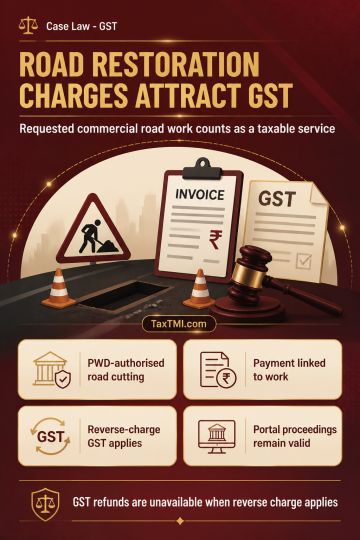
Road restoration charges constitute taxable services when requested for commercial pipeline activity, requiring reverse-charge GST from the business r...
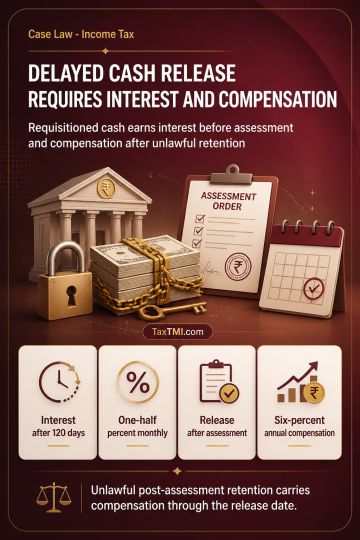
Interest on delayed release of requisitioned cash includes statutory pre-assessment interest and restitutionary compensation for unlawful post-assessm...
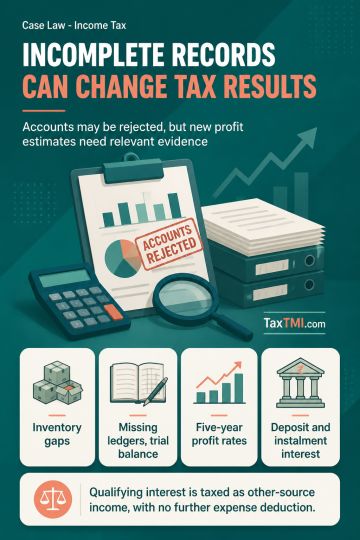
Incomplete inventory records justify rejecting accounts, while profit estimation requires relevant comparable material and interest falls under other ...
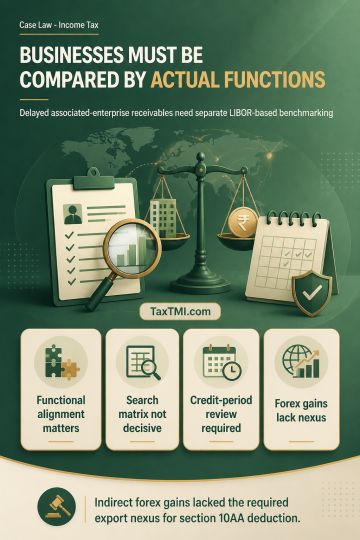
Transfer-pricing comparability requires functional alignment; delayed associated-enterprise receivables need separate LIBOR-based benchmarking, while ...
In faceless assessments involving a reference to the Valuation...
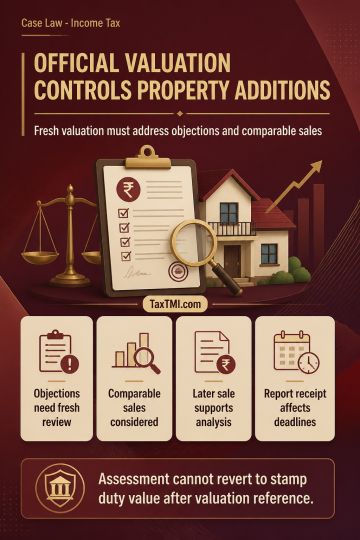
Valuation Officer estimates govern property-value additions once statutory valuation is invoked, requiring fresh consideration of objections and comparables.
Contents
Summary
Note
Bookmark
Share
✓ Copied successfully !
Print
Print Options
For full text, please login
Login to TaxTMI
Verification Pending
The Email Id has not been verified. Click on the link we have sent on
In faceless assessments involving a reference to the Valuation Officer, limitation is computed by reference to the Assessment Unit's receipt of the report through the prescribed channel, not merely the assessee's emailed copy. Exclusion of the reference period and the statutory extension of the remaining period can preserve the assessment's timeliness. For property acquired below stamp duty value, once the statutory valuation process is invoked, assessment must conform to the Valuation Officer's estimate rather than revert to stamp duty value. Methodology objections, comparable sales, independent valuation evidence and a subsequent sale require consideration in a fresh valuation, although later sale evidence is corroborative rather than determinative.
In faceless assessments involving a reference to the Valuation Officer, limitation is computed by reference to the Assessment Unit's receipt of the report through the prescribed channel, not merely the assessee's emailed copy. Exclusion of the reference period and the statutory extension of the remaining period can preserve the assessment's timeliness. For property acquired below stamp duty value, once the statutory valuation process is invoked, assessment must conform to the Valuation Officer's estimate rather than revert to stamp duty value. Methodology objections, comparable sales, independent valuation evidence and a subsequent sale require consideration in a fresh valuation, although later sale evidence is corroborative rather than determinative.
Note: It is a system-generated summary and is for quick reference only.
 TaxTMI
 TaxTMI

 of 4937