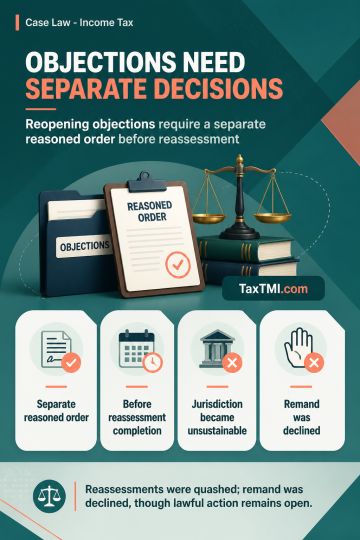
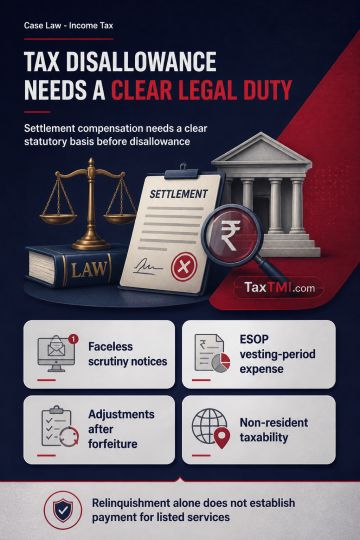
Separate speaking orders on reopening objections are mandatory; deciding them within reassessment invalidates jurisdiction and precludes revival of st...
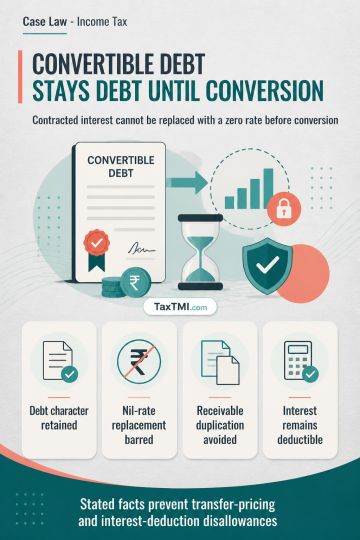
Compulsorily convertible debentures remain debt before conversion, preventing transfer-pricing and interest-deduction disallowances on the stated fact...
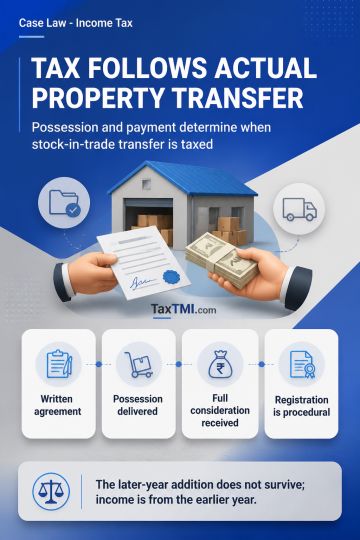
Stock-in-trade transfer taxability follows possession and consideration, not later conveyance registration, limiting deemed-value provisions to the ac...
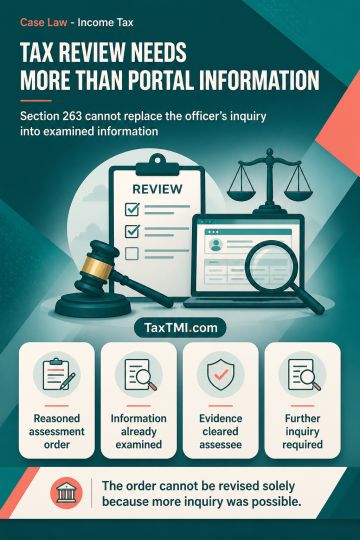
Revisional jurisdiction under section 263 requires an assessment order to be both erroneous and prejudicial to Revenue interests. Revision cannot rest merely on Insight Portal information that the Assessing Officer already examined during reassessment, where the officer considered explanations and supporting evidence showing that the alleged accommodation-entry transactions did not concern the assessee. The revisional authority must identify discrepancies in the material examined or conduct further inquiry; it cannot substitute its view merely because additional inquiry was possible. Sufficient inquiry by the Assessing Officer distinguishes an impermissible review for allegedly inadequate inquiry from a valid revision based on lack of inquiry.
Revisional jurisdiction under section 263 requires an assessment order to be both erroneous and prejudicial to Revenue interests. Revision cannot rest merely on Insight Portal information that the Assessing Officer already examined during reassessment, where the officer considered explanations and supporting evidence showing that the alleged accommodation-entry transactions did not concern the assessee. The revisional authority must identify discrepancies in the material examined or conduct further inquiry; it cannot substitute its view merely because additional inquiry was possible. Sufficient inquiry by the Assessing Officer distinguishes an impermissible review for allegedly inadequate inquiry from a valid revision based on lack of inquiry.
Note: It is a system-generated summary and is for quick reference only.
 TaxTMI
  TaxTMI
 of 4894