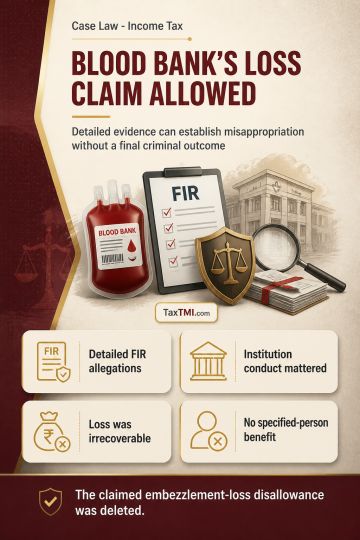
Embezzlement losses in charitable institutions remain allowable when misappropriation is established, irrecoverable, and not a specified-person benefi...
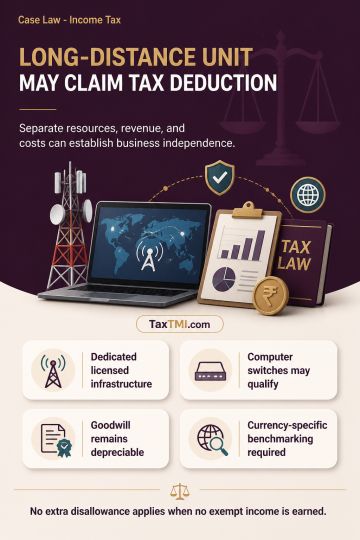
National long-distance undertaking status supports deduction where separately licensed infrastructure, resources, revenue, and expenditure establish c...
Agency reimbursement income follows contractual deposit-liability computation, while pending deposit collections do not constitute deemed-dividend loa...
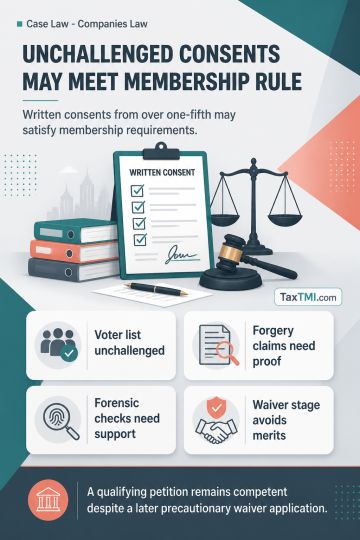
Membership-consent thresholds for oppression petitions are satisfied by unchallenged voter-list consents, while unsupported forgery claims require pro...
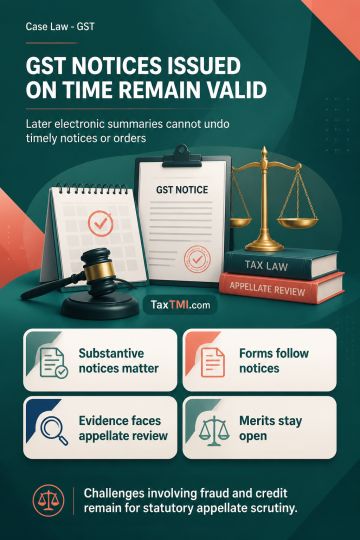
GST limitation under Section 74 turns on issuance of substantive show-cause notices and adjudication orders, while Rule 142 requires consequential electronic summaries in Forms GST DRC-01 and DRC-07. Later dates on those forms do not invalidate notices or Orders-in-Original issued within the applicable limitation period. Challenges involving fraud, suppression, supplier knowledge or collusion, input tax credit entitlement, and departmental evidence require statutory appellate scrutiny where no denial of hearing or patent jurisdictional defect exists. Merits remain open before the Appellate Authority.
GST limitation under Section 74 turns on issuance of substantive show-cause notices and adjudication orders, while Rule 142 requires consequential electronic summaries in Forms GST DRC-01 and DRC-07. Later dates on those forms do not invalidate notices or Orders-in-Original issued within the applicable limitation period. Challenges involving fraud, suppression, supplier knowledge or collusion, input tax credit entitlement, and departmental evidence require statutory appellate scrutiny where no denial of hearing or patent jurisdictional defect exists. Merits remain open before the Appellate Authority.
Note: It is a system-generated summary and is for quick reference only.
 TaxTMI
  TaxTMI
 of 4888