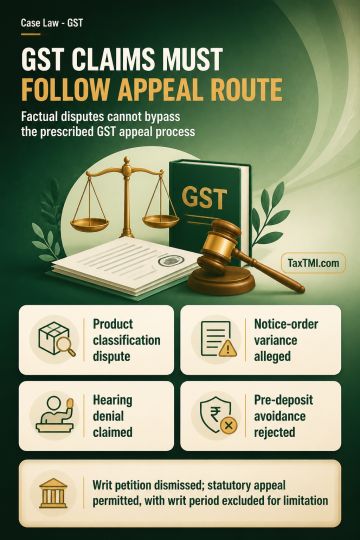
Alternative statutory remedy under GST bars writ challenge where classification, notice variance, and hearing disputes require factual appellate revie...
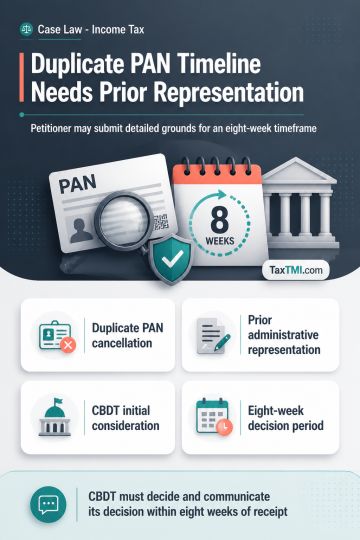
Duplicate PAN cancellation timeframe requires prior administrative representation before judicial intervention, ensuring a time-bound decision on the ...
Natural justice and pre-CIRP labour awards protect termination compensation, permitting withdrawal of court deposits despite later insolvency resoluti...
Page of 4886
Press 'Enter' after typing page number.
21 to 40 of 97705 Results
❮
❯
❯❯
0 / 200
Expand Note
Add to Folder
No Folders have been created
+
Are you sure you want to delete "My most important" ?
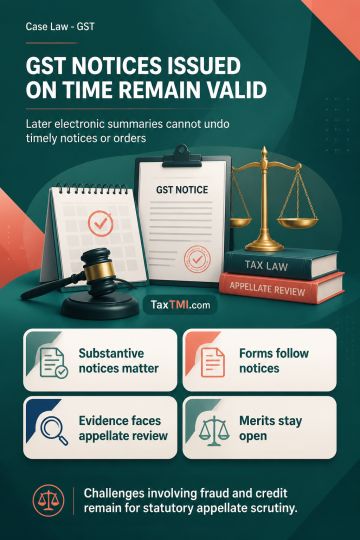
GST limitation under Section 74 turns on issuance of substantive show-cause notices and adjudication orders, while Rule 142 requires consequential electronic summaries in Forms GST DRC-01 and DRC-07. Later dates on those forms do not invalidate notices or Orders-in-Original issued within the applicable limitation period. Challenges involving fraud, suppression, supplier knowledge or collusion, input tax credit entitlement, and departmental evidence require statutory appellate scrutiny where no denial of hearing or patent jurisdictional defect exists. Merits remain open before the Appellate Authority.
GST limitation under Section 74 turns on issuance of substantive show-cause notices and adjudication orders, while Rule 142 requires consequential electronic summaries in Forms GST DRC-01 and DRC-07. Later dates on those forms do not invalidate notices or Orders-in-Original issued within the applicable limitation period. Challenges involving fraud, suppression, supplier knowledge or collusion, input tax credit entitlement, and departmental evidence require statutory appellate scrutiny where no denial of hearing or patent jurisdictional defect exists. Merits remain open before the Appellate Authority.
Note: It is a system-generated summary and is for quick reference only.
 TaxTMI
  TaxTMI
 of 4886