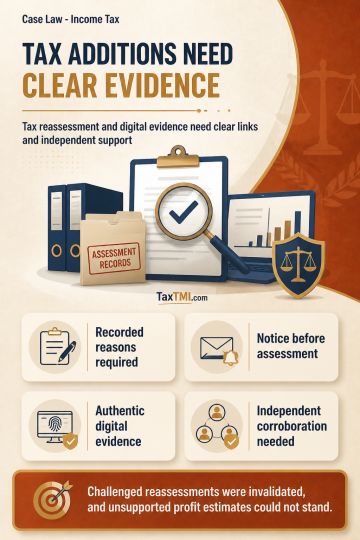
Judicial discipline requires consistent reassessment treatment where identical facts were decided for the same taxpayer in the preceding assessment ye...
Known departmental attachments in a SARFAESI auction constitute encumbrances where entered in the encumbrance certificate and restrict alienation, transfer and further charges. Rules 9(6) to 9(10) require disclosure of known encumbrances and allow delivery free of them only after deposit of the amount required for discharge. Secured-creditor priority over Government dues governs recovery of secured debt but does not displace that mandatory sale procedure. Accordingly, a disclosed departmental attachment cannot be removed from the encumbrance certificate, nor can an auction purchaser avoid the associated dues, unless they are discharged. A secured creditor is not functus officio while any part of its debt remains unrecovered and enforcement continues.
Known departmental attachments in a SARFAESI auction constitute encumbrances where entered in the encumbrance certificate and restrict alienation, transfer and further charges. Rules 9(6) to 9(10) require disclosure of known encumbrances and allow delivery free of them only after deposit of the amount required for discharge. Secured-creditor priority over Government dues governs recovery of secured debt but does not displace that mandatory sale procedure. Accordingly, a disclosed departmental attachment cannot be removed from the encumbrance certificate, nor can an auction purchaser avoid the associated dues, unless they are discharged. A secured creditor is not functus officio while any part of its debt remains unrecovered and enforcement continues.
Note: It is a system-generated summary and is for quick reference only.
 TaxTMI
  TaxTMI
 of 4886