Duplicate PAN allocation requires record verification and deactivation reasons before assessment-related transactions can be attributed to an assessee...
Faceless assessment safeguards require requested personal hearings and adequate final show-cause response time, failing which reassessment is required...
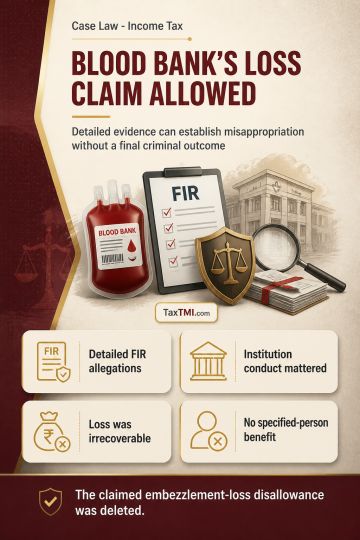
Embezzlement losses in charitable institutions remain allowable when misappropriation is established, irrecoverable, and not a specified-person benefi...
National long-distance undertaking status supports deduction where separately licensed infrastructure, resources, revenue, and expenditure establish c...
Agency reimbursement income follows contractual deposit-liability computation, while pending deposit collections do not constitute deemed-dividend loa...
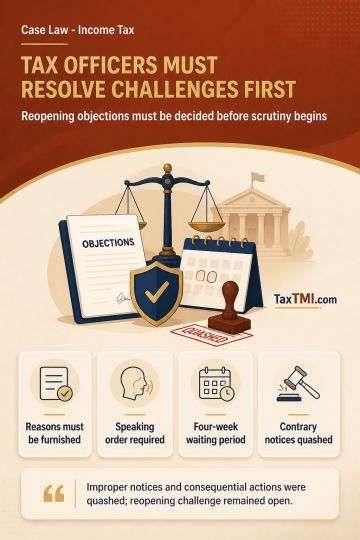
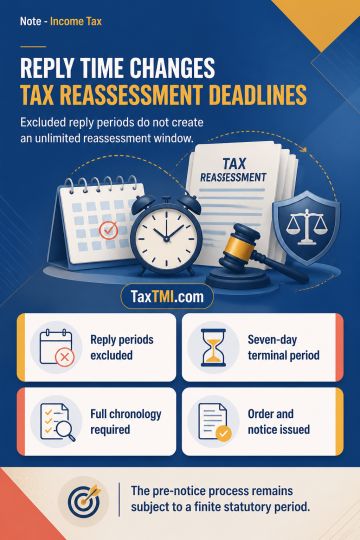
Under the former reassessment framework, time allowed or extended for an assessee's reply to a Section 148A(b) show-cause notice is excluded when computing the Section 149 limitation period. A notice is not invalid merely because the response period runs beyond the original limitation deadline. After that exclusion, where the remaining time does not exceed seven days, the sixth proviso provides a seven-day terminal period for issuing the Section 148A(d) order and consequential Section 148 notice. The exclusion does not create an open-ended period. Limitation must therefore be computed through the complete chronology of response periods, adjournments, extensions, reply-stage closure, and issuance of both the order and notice.
Under the former reassessment framework, time allowed or extended for an assessee's reply to a Section 148A(b) show-cause notice is excluded when computing the Section 149 limitation period. A notice is not invalid merely because the response period runs beyond the original limitation deadline. After that exclusion, where the remaining time does not exceed seven days, the sixth proviso provides a seven-day terminal period for issuing the Section 148A(d) order and consequential Section 148 notice. The exclusion does not create an open-ended period. Limitation must therefore be computed through the complete chronology of response periods, adjournments, extensions, reply-stage closure, and issuance of both the order and notice.
Note: It is a system-generated summary and is for quick reference only.
 TaxTMI
  TaxTMI
 of 4886