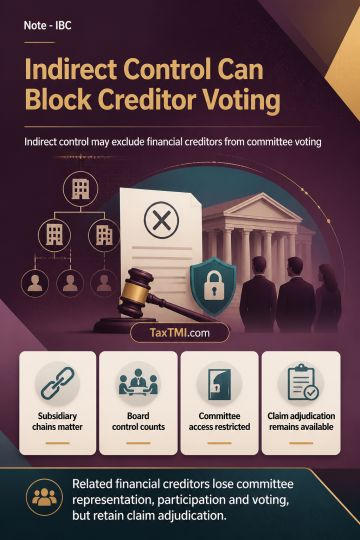
Indirect corporate control can create related-party status, excluding financial creditors from Committee of Creditors representation, participation an...
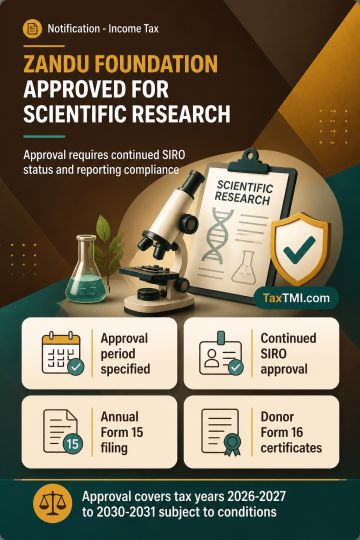
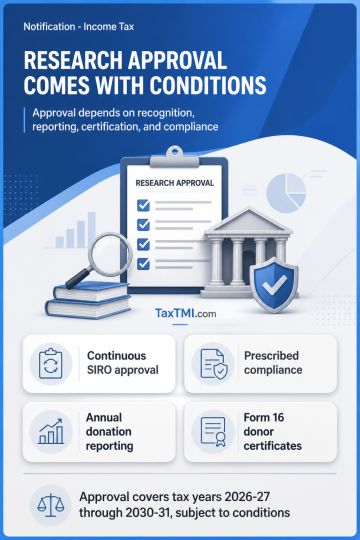
Scientific research association approval requires continuing SIRO status, annual donation reporting, and donor certificates for the approved foundatio...
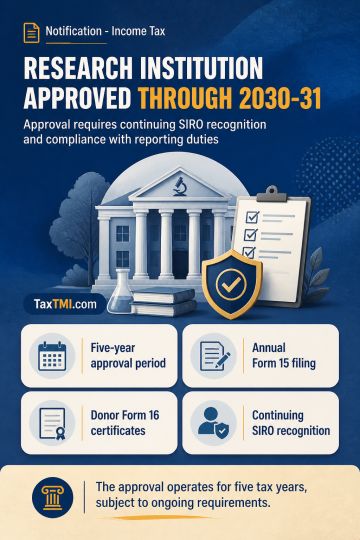
Scientific research institution approval is conditional on SIRO recognition, annual donation reporting, donor certification, and prescribed compliance...
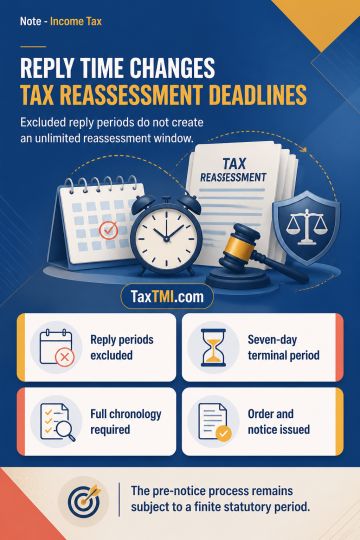
Under the former reassessment framework, time allowed or extended for an assessee's reply to a Section 148A(b) show-cause notice is excluded when computing the Section 149 limitation period. A notice is not invalid merely because the response period runs beyond the original limitation deadline. After that exclusion, where the remaining time does not exceed seven days, the sixth proviso provides a seven-day terminal period for issuing the Section 148A(d) order and consequential Section 148 notice. The exclusion does not create an open-ended period. Limitation must therefore be computed through the complete chronology of response periods, adjournments, extensions, reply-stage closure, and issuance of both the order and notice.
Under the former reassessment framework, time allowed or extended for an assessee's reply to a Section 148A(b) show-cause notice is excluded when computing the Section 149 limitation period. A notice is not invalid merely because the response period runs beyond the original limitation deadline. After that exclusion, where the remaining time does not exceed seven days, the sixth proviso provides a seven-day terminal period for issuing the Section 148A(d) order and consequential Section 148 notice. The exclusion does not create an open-ended period. Limitation must therefore be computed through the complete chronology of response periods, adjournments, extensions, reply-stage closure, and issuance of both the order and notice.
Note: It is a system-generated summary and is for quick reference only.
 TaxTMI
  TaxTMI
 of 4891