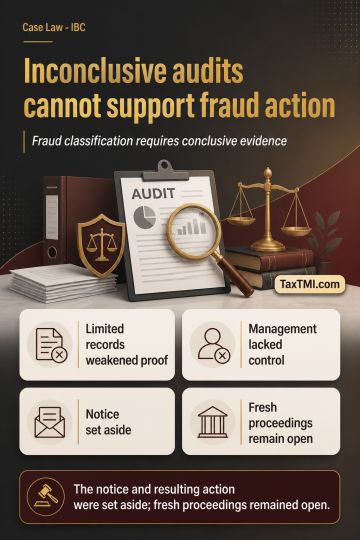
Fraud classification show-cause notices founded on inconclusive forensic audit material cannot sustain action, permitting fresh proceedings on conclus...
Appellate enhancement limits protect against new income sources, while documented credits and prior-year investments resist unexplained-income additio...
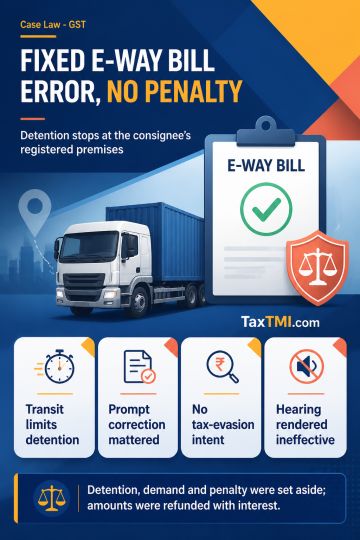
Section 129 confines detention of goods to the period of transit and does not support detention after the vehicle has reached the consignee's registered premises. A promptly corrected Part-B omission in an e-way bill, supported by valid invoices and Part-A details, was treated as a minor procedural lapse that could not justify detention or penalty absent revenue loss or evidence of intent to evade tax. An adjudication order dated before the personal hearing breached audi alteram partem by rendering the hearing ineffective. The detention, tax demand and penalty were set aside, with refund of amounts collected under protest and applicable statutory interest.
Section 129 confines detention of goods to the period of transit and does not support detention after the vehicle has reached the consignee's registered premises. A promptly corrected Part-B omission in an e-way bill, supported by valid invoices and Part-A details, was treated as a minor procedural lapse that could not justify detention or penalty absent revenue loss or evidence of intent to evade tax. An adjudication order dated before the personal hearing breached audi alteram partem by rendering the hearing ineffective. The detention, tax demand and penalty were set aside, with refund of amounts collected under protest and applicable statutory interest.
Note: It is a system-generated summary and is for quick reference only.
 TaxTMI
  TaxTMI
 of 4881