Fraud classification show-cause notices founded on inconclusive forensic audit material cannot sustain action, permitting fresh proceedings on conclus...
Appellate enhancement limits protect against new income sources, while documented credits and prior-year investments resist unexplained-income additio...
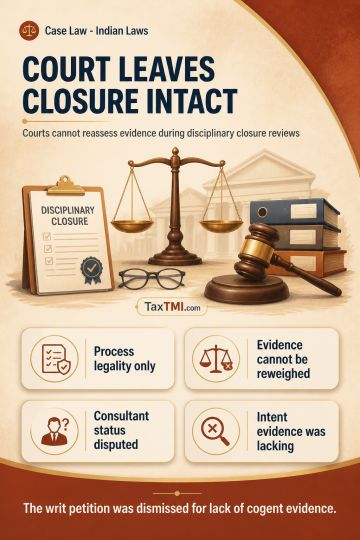
Judicial review of closure of a disciplinary complaint concerning alleged unauthorised access to and alteration of an income-tax account is confined to examining the legality of the decision-making process. Writ jurisdiction does not permit reappreciation of evidence or substitution of the disciplinary authority's view. The absence of a fiduciary relationship did not itself exclude misconduct, but was material where the prima facie view assumed that the Chartered Accountant was the petitioner's tax consultant, which both denied. The closure rested on lack of cogent evidence of mala fide intent or deliberate facilitation, rather than merely pending criminal proceedings; the writ petition was dismissed.
Judicial review of closure of a disciplinary complaint concerning alleged unauthorised access to and alteration of an income-tax account is confined to examining the legality of the decision-making process. Writ jurisdiction does not permit reappreciation of evidence or substitution of the disciplinary authority's view. The absence of a fiduciary relationship did not itself exclude misconduct, but was material where the prima facie view assumed that the Chartered Accountant was the petitioner's tax consultant, which both denied. The closure rested on lack of cogent evidence of mala fide intent or deliberate facilitation, rather than merely pending criminal proceedings; the writ petition was dismissed.
Note: It is a system-generated summary and is for quick reference only.
 TaxTMI
  TaxTMI
 of 4891