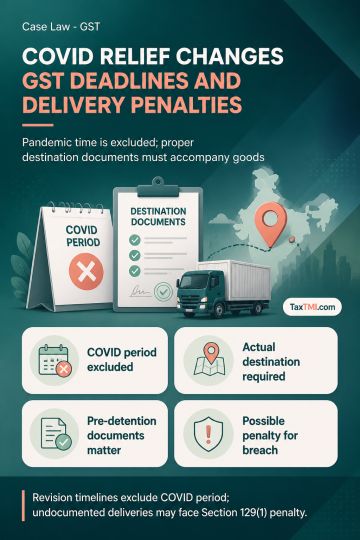
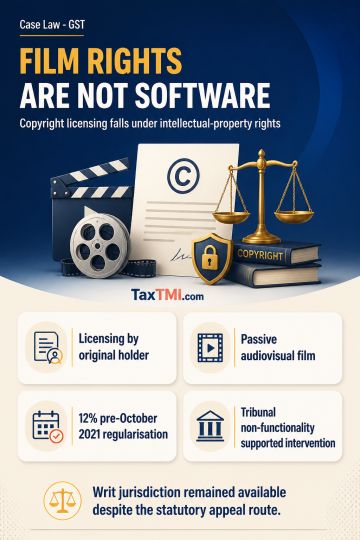
COVID-19 limitation exclusion and destination-specific e-way bills govern revisional timelines and penalties for undocumented third-party plywood deli...
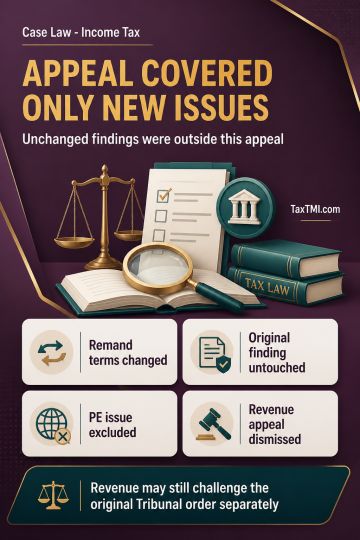
Questions arising from miscellaneous application orders cannot challenge unaltered Tribunal findings, leaving the original order separately challengea...
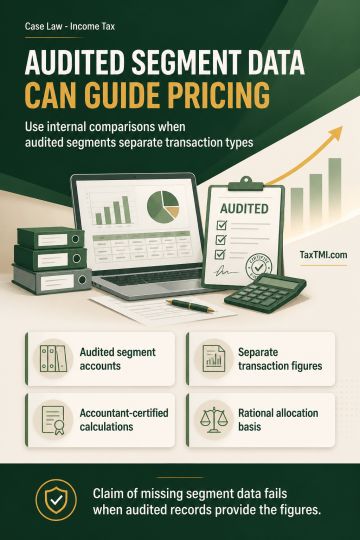
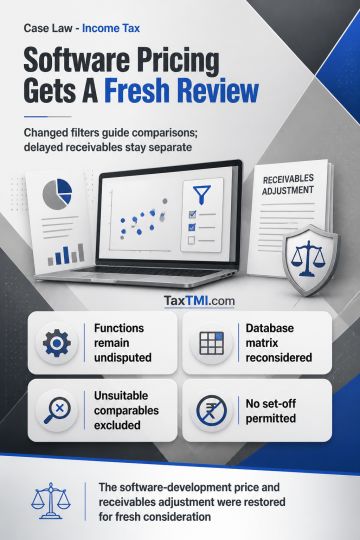
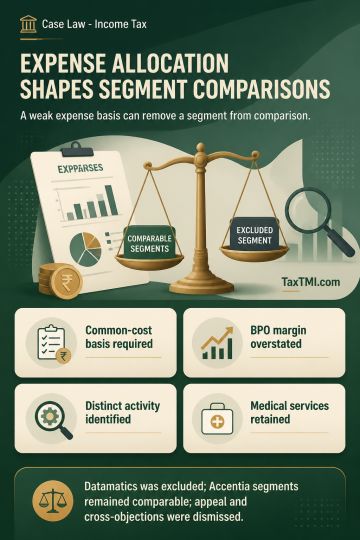
Transfer-pricing comparability filters require fresh arm's-length analysis, while delayed receivables need separate reconsideration with working-capit...
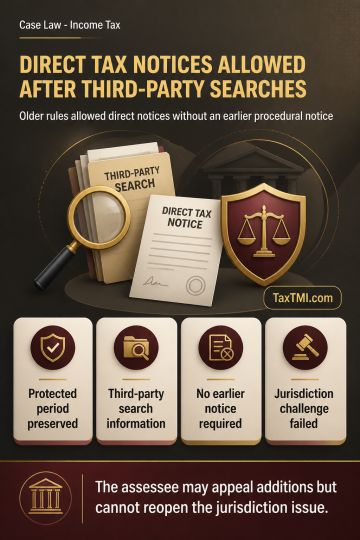
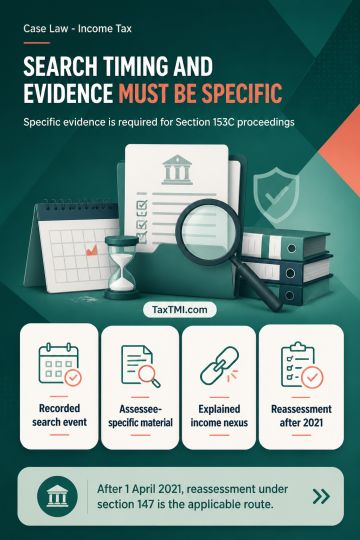
Section 153C jurisdiction requires timely deemed search and assessee-specific satisfaction material; otherwise reassessment must use the proper statut...
Page of 4891
Press 'Enter' after typing page number.
681 to 700 of 97820 Results
❮
❯
❯❯
0 / 200
Expand Note
Add to Folder
No Folders have been created
+
Are you sure you want to delete "My most important" ?
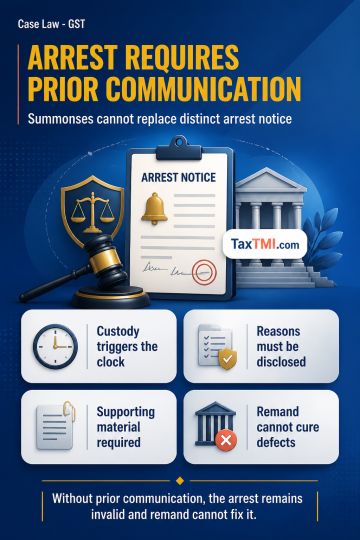
CGST arrest commences when the person is actually deprived of liberty and placed in custody, not merely when present during a search, inquiry or statement recording. The twenty-four-hour period for production before a Magistrate runs from that actual arrest. Where a judicial undertaking requires seven working days' prior notice of arrest, a summons requiring attendance, evidence or documents is insufficient because it does not communicate a contemplated arrest. The Commissioner's arrest authorisation must contain and disclose reasons to believe, supporting material and application of mind before arrest. An arrest memo cannot substitute for that authorisation; failure of prior communication vitiates the arrest and later remand cannot cure the defect.
CGST arrest commences when the person is actually deprived of liberty and placed in custody, not merely when present during a search, inquiry or statement recording. The twenty-four-hour period for production before a Magistrate runs from that actual arrest. Where a judicial undertaking requires seven working days' prior notice of arrest, a summons requiring attendance, evidence or documents is insufficient because it does not communicate a contemplated arrest. The Commissioner's arrest authorisation must contain and disclose reasons to believe, supporting material and application of mind before arrest. An arrest memo cannot substitute for that authorisation; failure of prior communication vitiates the arrest and later remand cannot cure the defect.
Note: It is a system-generated summary and is for quick reference only.
 TaxTMI
  TaxTMI
 of 4891