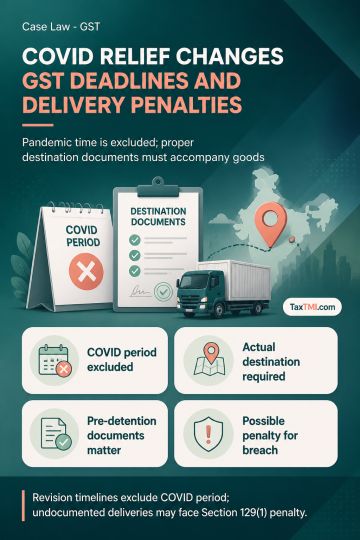
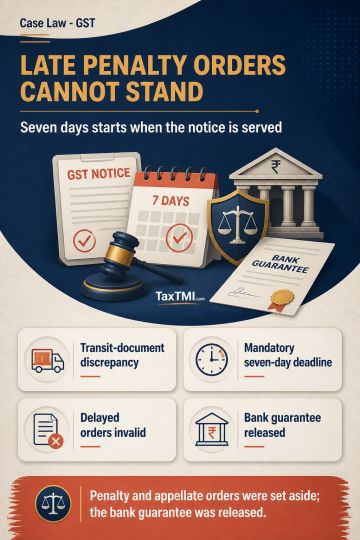
COVID-19 limitation exclusion and destination-specific e-way bills govern revisional timelines and penalties for undocumented third-party plywood deli...
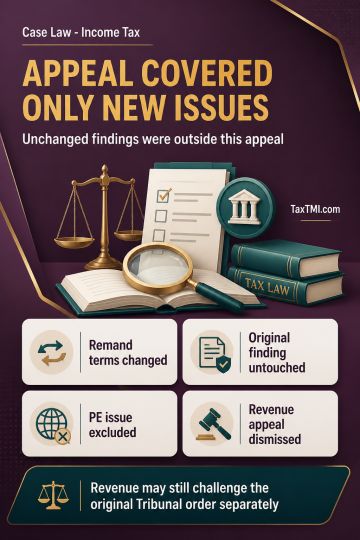
Questions arising from miscellaneous application orders cannot challenge unaltered Tribunal findings, leaving the original order separately challengea...
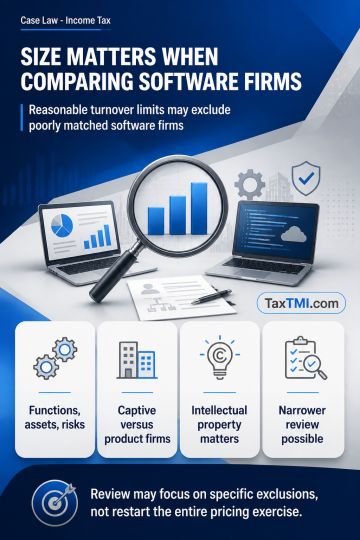
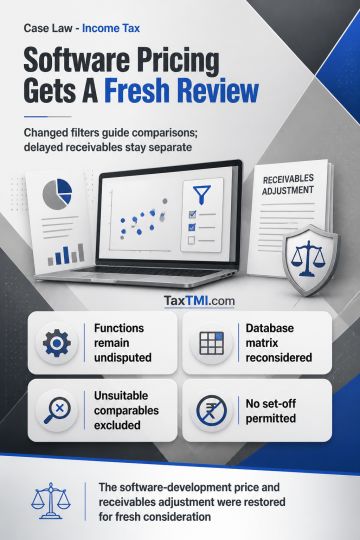
Transfer-pricing comparability filters require fresh arm's-length analysis, while delayed receivables need separate reconsideration with working-capit...
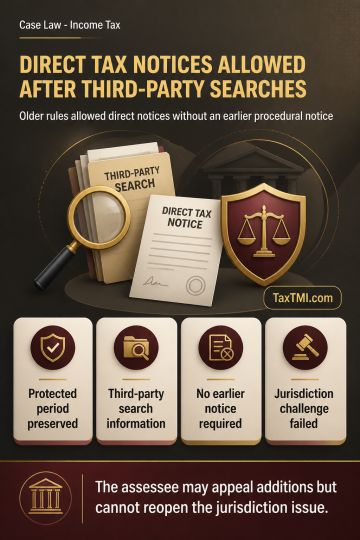
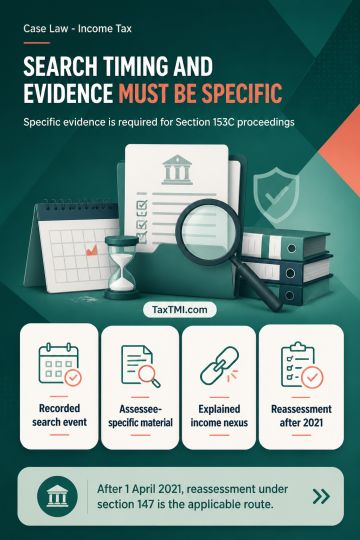
Section 153C jurisdiction requires timely deemed search and assessee-specific satisfaction material; otherwise reassessment must use the proper statut...
Page of 4891
Press 'Enter' after typing page number.
681 to 700 of 97820 Results
❮
❯
❯❯
0 / 200
Expand Note
Add to Folder
No Folders have been created
+
Are you sure you want to delete "My most important" ?
Transfer-pricing benchmarking must separately assess support...
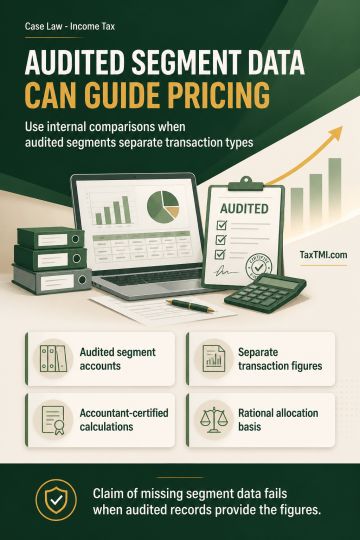
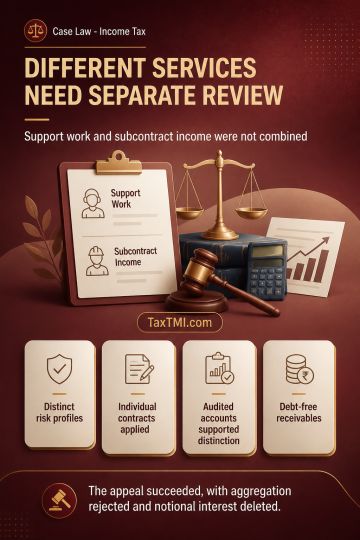
Transfer-pricing aggregation of distinct support-service and subcontract transactions was rejected, while debt-free receivables attracted no notional interest.
Contents
Summary
Note
Bookmark
Share
✓ Copied successfully !
Print
Print Options
For full text, please login
Login to TaxTMI
Verification Pending
The Email Id has not been verified. Click on the link we have sent on
Transfer-pricing benchmarking must separately assess support services rendered on a cost-plus, limited-risk basis and subcontract receipts from a full-risk entrepreneurial segment where separate agreements, functional profiles and risks apply. Their common character as BPO services does not justify aggregation, particularly where separate audited accounts are furnished. The Tribunal rejected aggregation on those grounds. Applying the jurisdictional High Court ruling, the Tribunal also deleted notional interest on delayed receivables because the assessee was debt-free and the Revenue did not distinguish the precedent. The appeal was allowed.
Transfer-pricing benchmarking must separately assess support services rendered on a cost-plus, limited-risk basis and subcontract receipts from a full-risk entrepreneurial segment where separate agreements, functional profiles and risks apply. Their common character as BPO services does not justify aggregation, particularly where separate audited accounts are furnished. The Tribunal rejected aggregation on those grounds. Applying the jurisdictional High Court ruling, the Tribunal also deleted notional interest on delayed receivables because the assessee was debt-free and the Revenue did not distinguish the precedent. The appeal was allowed.
Note: It is a system-generated summary and is for quick reference only.
 TaxTMI
  TaxTMI
 of 4891