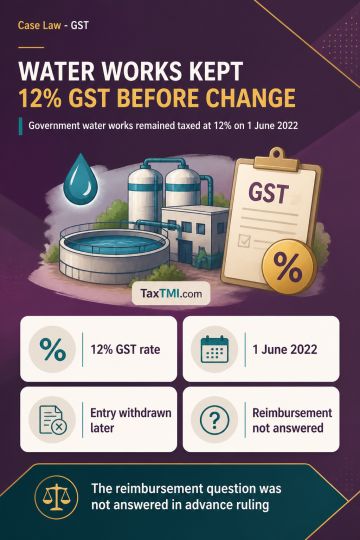
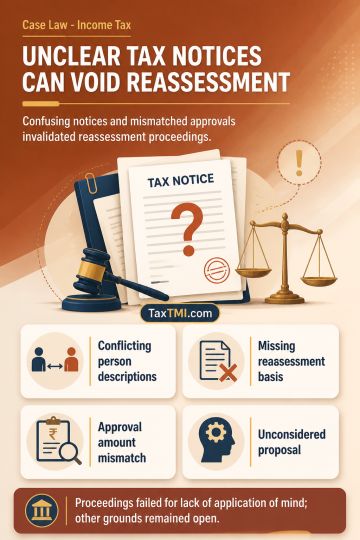
Government water works contract GST concession applied before its withdrawal, while contractual tax reimbursement claims lay outside advance-ruling sc...
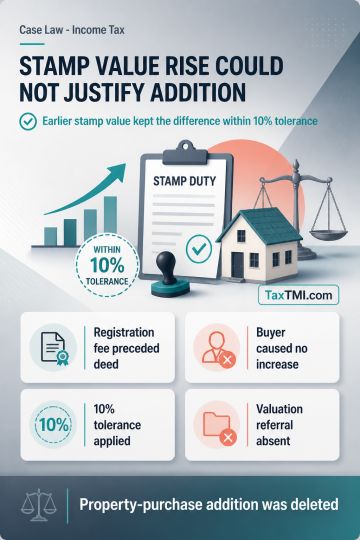
Stamp valuation increases after registration-fee payment led to deletion of property-purchase addition within tolerance and without valuation referral...
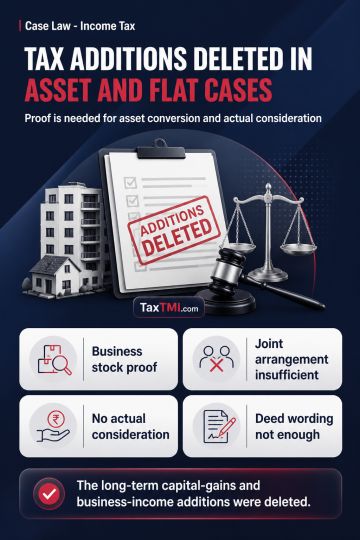
Capital Asset Conversion Requires Proven Business Stock Treatment; Paper Consideration in Spousal Flat Transfers Does Not Create Taxable Business Inco...
Page of 4881
Press 'Enter' after typing page number.
341 to 360 of 97618 Results
❮
❯
❯❯
0 / 200
Expand Note
Add to Folder
No Folders have been created
+
Are you sure you want to delete "My most important" ?
Transfer-pricing benchmarking must separately assess support...
Transfer-pricing aggregation of distinct support-service and subcontract transactions was rejected, while debt-free receivables attracted no notional interest.
Contents
Summary
Note
Bookmark
Share
✓ Copied successfully !
Print
Print Options
For full text, please login
Login to TaxTMI
Verification Pending
The Email Id has not been verified. Click on the link we have sent on
Transfer-pricing benchmarking must separately assess support services rendered on a cost-plus, limited-risk basis and subcontract receipts from a full-risk entrepreneurial segment where separate agreements, functional profiles and risks apply. Their common character as BPO services does not justify aggregation, particularly where separate audited accounts are furnished. The Tribunal rejected aggregation on those grounds. Applying the jurisdictional High Court ruling, the Tribunal also deleted notional interest on delayed receivables because the assessee was debt-free and the Revenue did not distinguish the precedent. The appeal was allowed.
Transfer-pricing benchmarking must separately assess support services rendered on a cost-plus, limited-risk basis and subcontract receipts from a full-risk entrepreneurial segment where separate agreements, functional profiles and risks apply. Their common character as BPO services does not justify aggregation, particularly where separate audited accounts are furnished. The Tribunal rejected aggregation on those grounds. Applying the jurisdictional High Court ruling, the Tribunal also deleted notional interest on delayed receivables because the assessee was debt-free and the Revenue did not distinguish the precedent. The appeal was allowed.
Note: It is a system-generated summary and is for quick reference only.
 TaxTMI
  TaxTMI
 of 4881