Capital-gains exemption for charitable trusts extends to qualifying fixed deposits, while unrecoverable TDS write-offs may constitute income applicati...
India-UK treaty characterisation of telecom-service receipts as business profits withstands unilateral domestic-law amendments for Indian tax purposes...
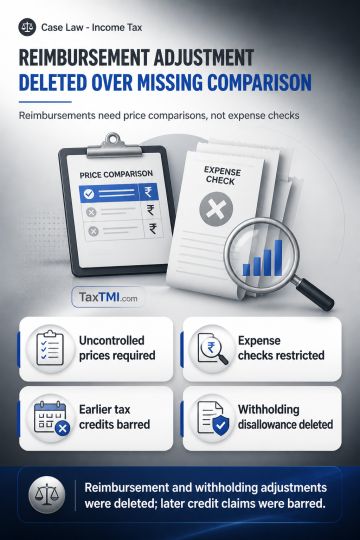
Transfer-pricing reimbursement adjustments require uncontrolled comparables and cannot become expense-genuineness reviews, resulting in deletion of th...
Food import sampling requirements support provisional release where unseized consignments conform to standards and raw areca classification is unestab...
Transfer-pricing benchmarking must separately assess support...
Transfer-pricing aggregation of distinct support-service and subcontract transactions was rejected, while debt-free receivables attracted no notional interest.
Contents
Summary
Note
Bookmark
Share
✓ Copied successfully !
Print
Print Options
For full text, please login
Login to TaxTMI
Verification Pending
The Email Id has not been verified. Click on the link we have sent on
Transfer-pricing benchmarking must separately assess support services rendered on a cost-plus, limited-risk basis and subcontract receipts from a full-risk entrepreneurial segment where separate agreements, functional profiles and risks apply. Their common character as BPO services does not justify aggregation, particularly where separate audited accounts are furnished. The Tribunal rejected aggregation on those grounds. Applying the jurisdictional High Court ruling, the Tribunal also deleted notional interest on delayed receivables because the assessee was debt-free and the Revenue did not distinguish the precedent. The appeal was allowed.
Transfer-pricing benchmarking must separately assess support services rendered on a cost-plus, limited-risk basis and subcontract receipts from a full-risk entrepreneurial segment where separate agreements, functional profiles and risks apply. Their common character as BPO services does not justify aggregation, particularly where separate audited accounts are furnished. The Tribunal rejected aggregation on those grounds. Applying the jurisdictional High Court ruling, the Tribunal also deleted notional interest on delayed receivables because the assessee was debt-free and the Revenue did not distinguish the precedent. The appeal was allowed.
Note: It is a system-generated summary and is for quick reference only.
 TaxTMI
  TaxTMI
 of 4879