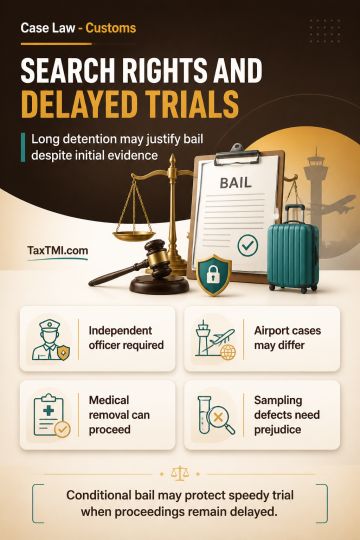
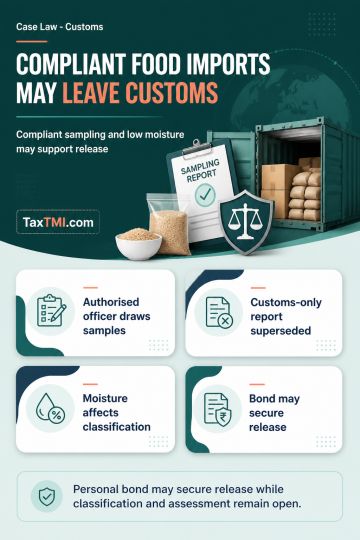
Food import sampling requirements support provisional release where unseized consignments conform to standards and raw areca classification is unestab...
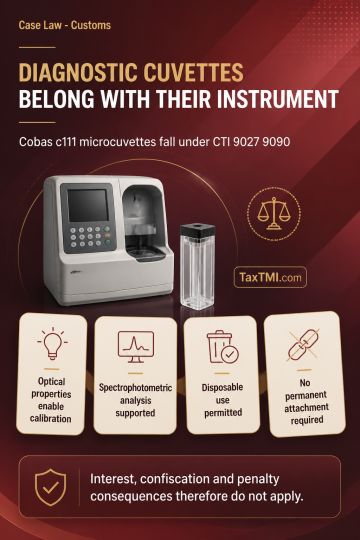
Diagnostic microcuvette classification follows sole-use analytical function, placing specialised disposable cuvettes with their analyser rather than g...
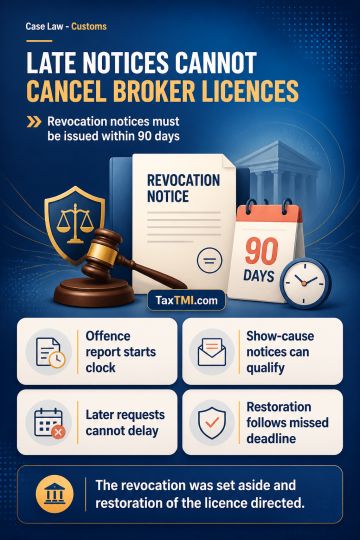
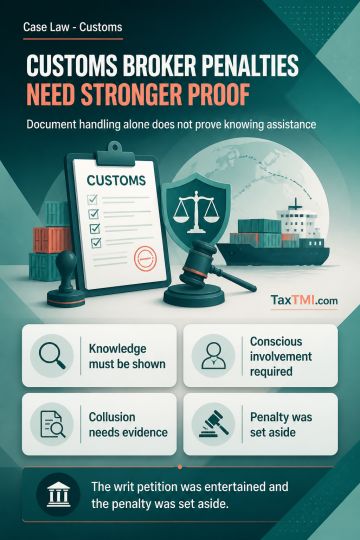
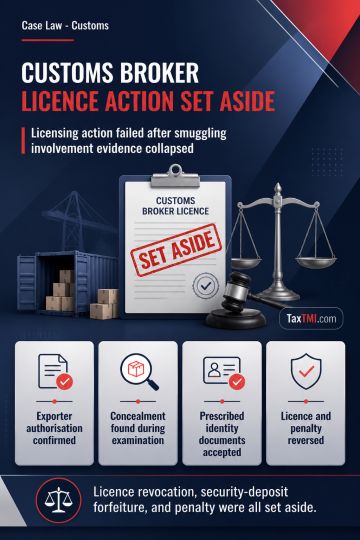
Customs Broker licensing proceedings fail when their offence-report foundation collapses and authorisation, advisory, and KYC duties remain unbreached...
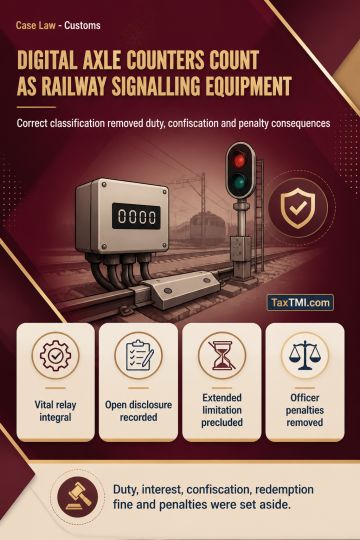
Tariff classification of Digital Axle Counters affirmed as electro-mechanical railway signalling equipment, eliminating duty, confiscation and penalty...
Related-party status under the IBC extends to indirect corporate...
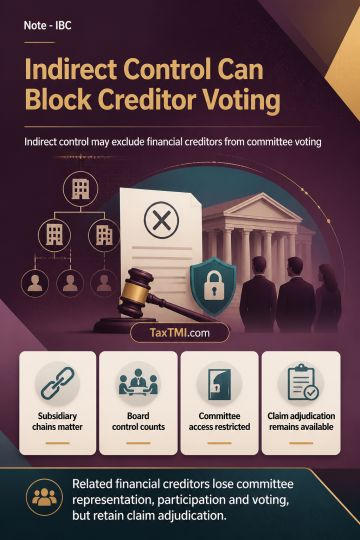
Indirect corporate control can create related-party status, excluding financial creditors from Committee of Creditors representation, participation and voting.
Contents
Summary
Note
Bookmark
Share
✓ Copied successfully !
Print
Print Options
For full text, please login
Login to TaxTMI
Verification Pending
The Email Id has not been verified. Click on the link we have sent on
Related-party status under the IBC extends to indirect corporate control through a subsidiary chain. Section 5(24)(i), read with the Companies Act definitions incorporated through Section 3(37), recognises a corporate debtor as a step-down subsidiary where an upstream holding company controls it through another subsidiary; direct shareholding is not required. Board-composition control is an independent basis for related-party classification under Section 5(24)(l), supported by appointment rights, voting arrangements, management rights and substantive control evidence. A related financial creditor is excluded from representation, participation and voting in the Committee of Creditors under the first proviso to Section 21(2), while remaining able to pursue adjudication of its claim.
Related-party status under the IBC extends to indirect corporate control through a subsidiary chain. Section 5(24)(i), read with the Companies Act definitions incorporated through Section 3(37), recognises a corporate debtor as a step-down subsidiary where an upstream holding company controls it through another subsidiary; direct shareholding is not required. Board-composition control is an independent basis for related-party classification under Section 5(24)(l), supported by appointment rights, voting arrangements, management rights and substantive control evidence. A related financial creditor is excluded from representation, participation and voting in the Committee of Creditors under the first proviso to Section 21(2), while remaining able to pursue adjudication of its claim.
Note: It is a system-generated summary and is for quick reference only.
 TaxTMI
  TaxTMI
 of 4886