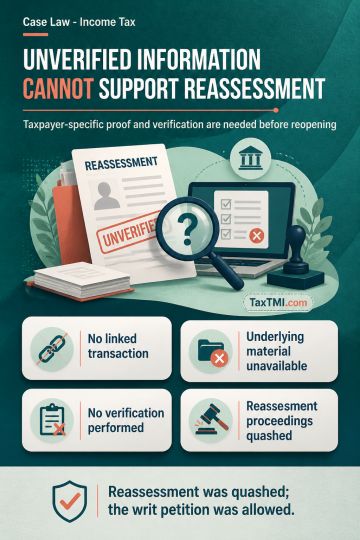
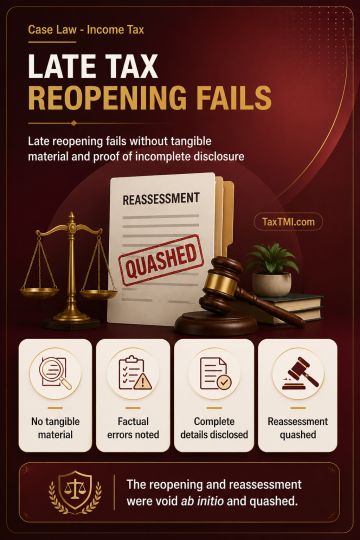
Unverified Insight Portal Information Cannot Justify Reassessment Without a Verified Taxpayer-Specific Income-Escape Nexus or Demonstrated Application...
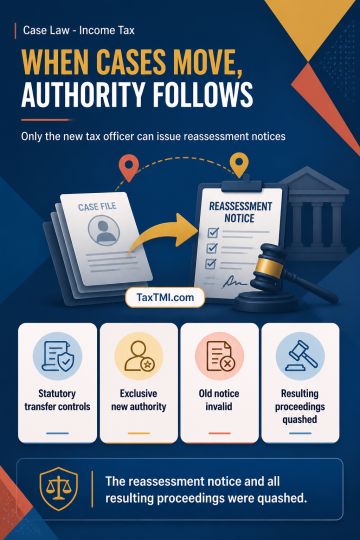
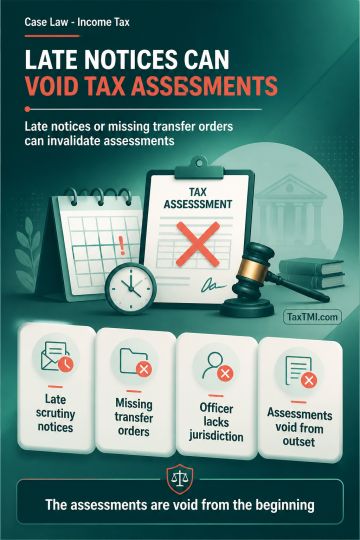
Assessing Officer jurisdiction after statutory transfer invalidates reassessment notices issued by transferor officers and nullifies resulting proceed...
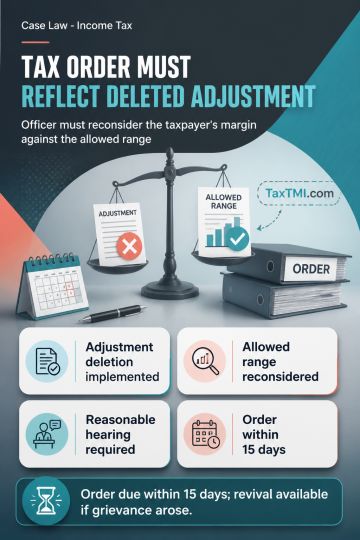
Consequential appeal-effect orders must implement rectification deleting working-capital adjustments and reconsider the resulting arm's-length range c...
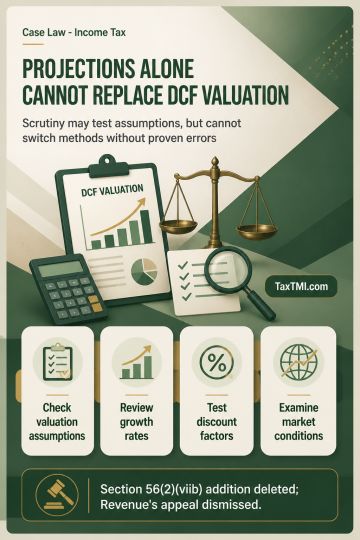
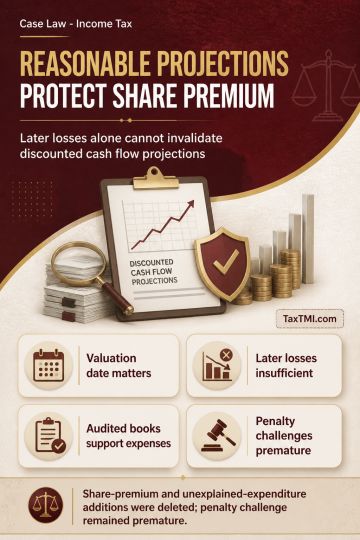
Discounted cash flow valuation protects share premium where projections are reasonable, while audited book expenses defeat unexplained-expenditure add...
Section 54 construction relief survives pre-transfer commencement when completion occurs within the statutory period, excluding ineligible spouse-owne...
Related-party status under the IBC extends to indirect corporate...
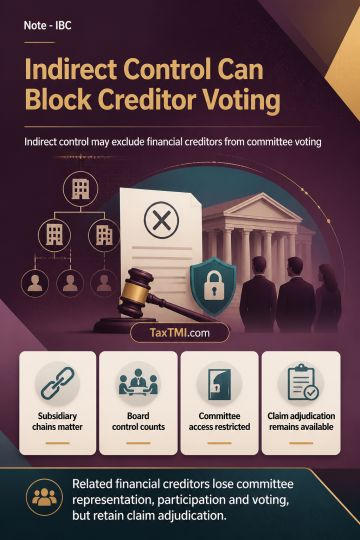
Indirect corporate control can create related-party status, excluding financial creditors from Committee of Creditors representation, participation and voting.
Contents
Summary
Note
Bookmark
Share
✓ Copied successfully !
Print
Print Options
For full text, please login
Login to TaxTMI
Verification Pending
The Email Id has not been verified. Click on the link we have sent on
Related-party status under the IBC extends to indirect corporate control through a subsidiary chain. Section 5(24)(i), read with the Companies Act definitions incorporated through Section 3(37), recognises a corporate debtor as a step-down subsidiary where an upstream holding company controls it through another subsidiary; direct shareholding is not required. Board-composition control is an independent basis for related-party classification under Section 5(24)(l), supported by appointment rights, voting arrangements, management rights and substantive control evidence. A related financial creditor is excluded from representation, participation and voting in the Committee of Creditors under the first proviso to Section 21(2), while remaining able to pursue adjudication of its claim.
Related-party status under the IBC extends to indirect corporate control through a subsidiary chain. Section 5(24)(i), read with the Companies Act definitions incorporated through Section 3(37), recognises a corporate debtor as a step-down subsidiary where an upstream holding company controls it through another subsidiary; direct shareholding is not required. Board-composition control is an independent basis for related-party classification under Section 5(24)(l), supported by appointment rights, voting arrangements, management rights and substantive control evidence. A related financial creditor is excluded from representation, participation and voting in the Committee of Creditors under the first proviso to Section 21(2), while remaining able to pursue adjudication of its claim.
Note: It is a system-generated summary and is for quick reference only.
 TaxTMI
  TaxTMI
 of 4881