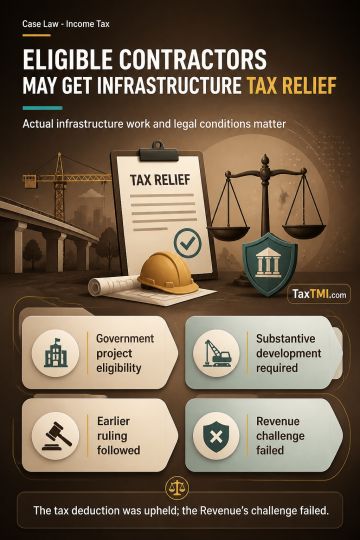
Infrastructure-development deduction remains available to EPC contractors when substantive statutory conditions outweigh contractor labels in agreemen...
Explained Investment Sources: documented gifts and traceable salary savings supported deletion of additions for property and mutual-fund SIP investmen...
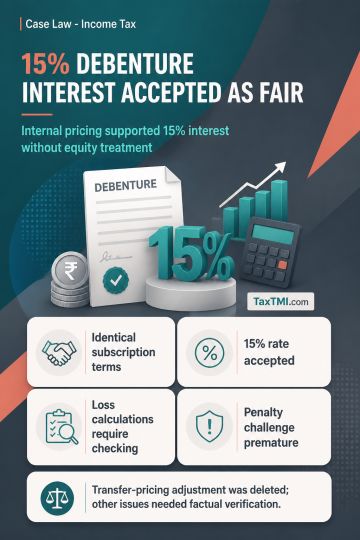
Internal comparable pricing supports arm's-length interest on compulsorily convertible debentures, preventing their recharacterisation as equity for t...
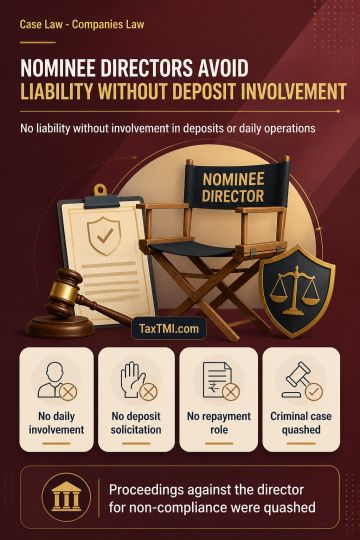
Nominee director protection shields independent financial-institution appointees from criminal liability where they lack involvement in deposit defaul...
Related-party status under the IBC extends to indirect corporate...
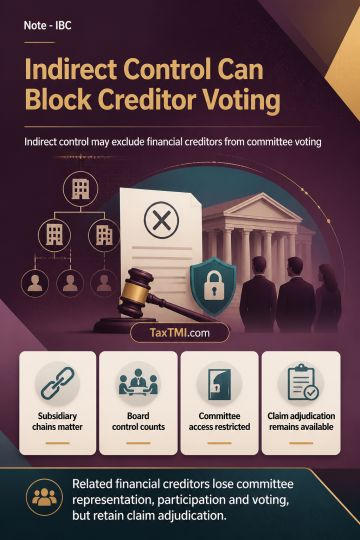
Indirect corporate control can create related-party status, excluding financial creditors from Committee of Creditors representation, participation and voting.
Contents
Summary
Note
Bookmark
Share
✓ Copied successfully !
Print
Print Options
For full text, please login
Login to TaxTMI
Verification Pending
The Email Id has not been verified. Click on the link we have sent on
Related-party status under the IBC extends to indirect corporate control through a subsidiary chain. Section 5(24)(i), read with the Companies Act definitions incorporated through Section 3(37), recognises a corporate debtor as a step-down subsidiary where an upstream holding company controls it through another subsidiary; direct shareholding is not required. Board-composition control is an independent basis for related-party classification under Section 5(24)(l), supported by appointment rights, voting arrangements, management rights and substantive control evidence. A related financial creditor is excluded from representation, participation and voting in the Committee of Creditors under the first proviso to Section 21(2), while remaining able to pursue adjudication of its claim.
Related-party status under the IBC extends to indirect corporate control through a subsidiary chain. Section 5(24)(i), read with the Companies Act definitions incorporated through Section 3(37), recognises a corporate debtor as a step-down subsidiary where an upstream holding company controls it through another subsidiary; direct shareholding is not required. Board-composition control is an independent basis for related-party classification under Section 5(24)(l), supported by appointment rights, voting arrangements, management rights and substantive control evidence. A related financial creditor is excluded from representation, participation and voting in the Committee of Creditors under the first proviso to Section 21(2), while remaining able to pursue adjudication of its claim.
Note: It is a system-generated summary and is for quick reference only.
 TaxTMI
  TaxTMI
 of 4881