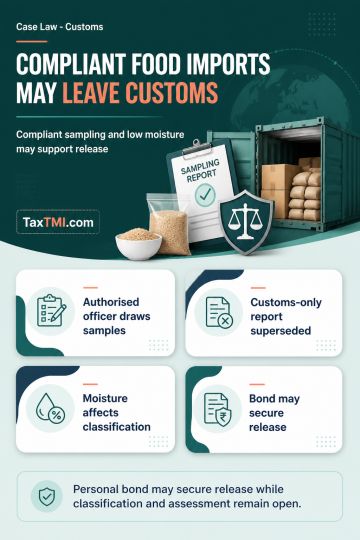
Food import sampling requirements support provisional release where unseized consignments conform to standards and raw areca classification is unestab...
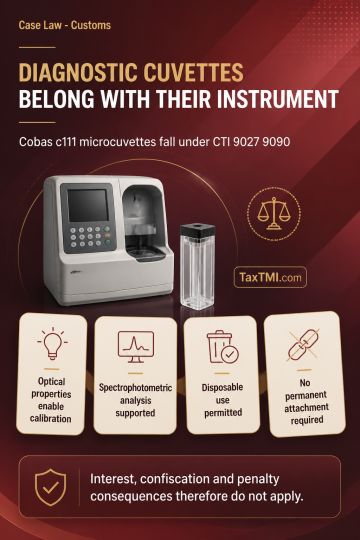
Diagnostic microcuvette classification follows sole-use analytical function, placing specialised disposable cuvettes with their analyser rather than g...
Customs Broker licensing proceedings fail when their offence-report foundation collapses and authorisation, advisory, and KYC duties remain unbreached...
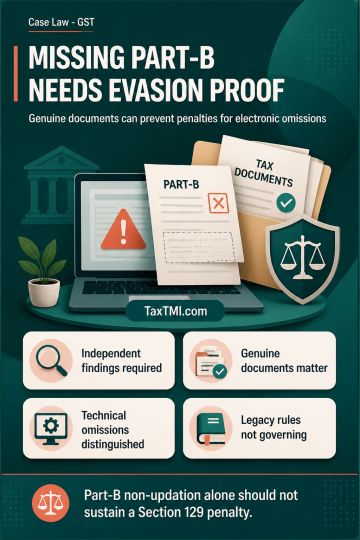
Section 129 penalties for failure to update Part-B of an e-way bill require independent findings of an intent to evade tax where the goods movement is otherwise supported by genuine tax documents. The integrated electronic GST framework distinguishes technical or procedural omissions from active tax-evasion attempts. Where the invoice, Part-A details and underlying transaction transparently establish the movement, non-updation of Part-B alone should not sustain a penalty. Strict-liability principles developed under the legacy manual check-post regime are not treated as governing such electronic GST compliance failures.
Section 129 penalties for failure to update Part-B of an e-way bill require independent findings of an intent to evade tax where the goods movement is otherwise supported by genuine tax documents. The integrated electronic GST framework distinguishes technical or procedural omissions from active tax-evasion attempts. Where the invoice, Part-A details and underlying transaction transparently establish the movement, non-updation of Part-B alone should not sustain a penalty. Strict-liability principles developed under the legacy manual check-post regime are not treated as governing such electronic GST compliance failures.
Note: It is a system-generated summary and is for quick reference only.
 TaxTMI
  TaxTMI
 of 4881