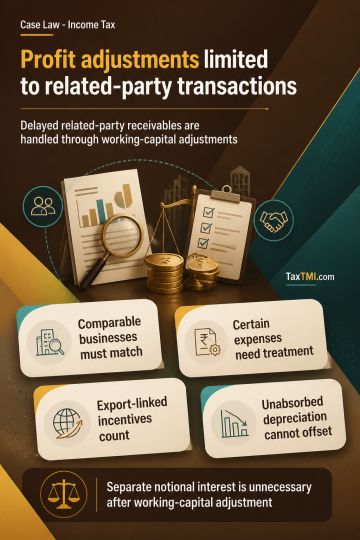
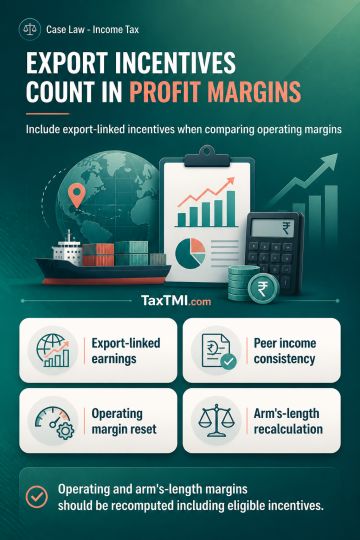
Transfer-pricing benchmarking confines adjustments to associated-enterprise transactions and integrates delayed receivables through TNMM working-capit...
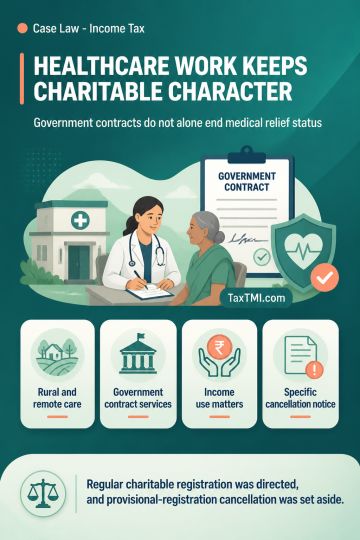
Medical relief status protects government-contracted mobile healthcare from commercial classification, while provisional registration cancellation req...
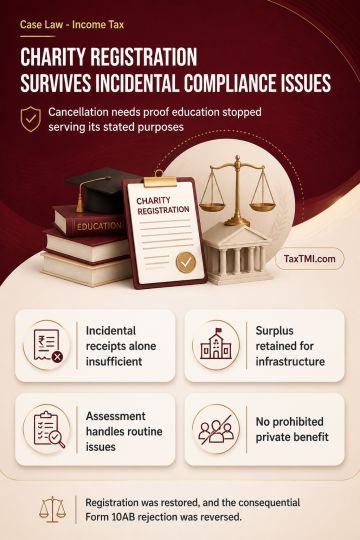
Charitable registration cancellation requires proof that educational activities abandoned their objects; incidental receipts and retained surplus are ...
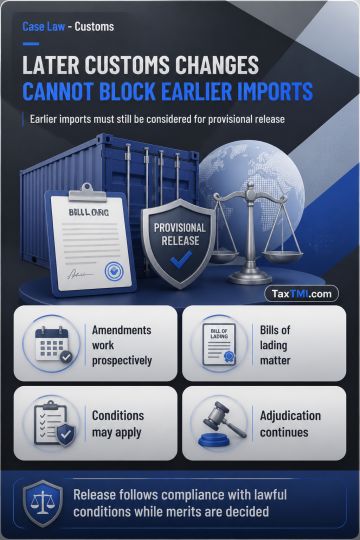
Prospective customs notification amendments cannot bar provisional release consideration for earlier imports when bills of lading predate their commen...
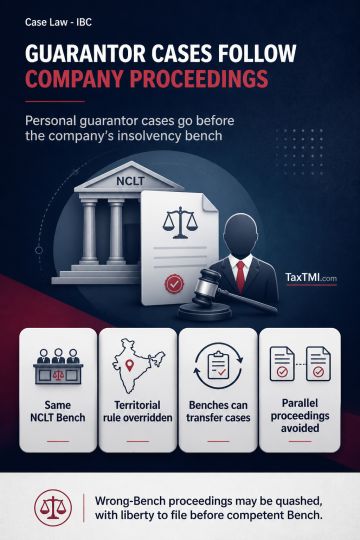
Personal guarantor insolvency jurisdiction follows the corporate debtor's CIRP Bench, enabling inter-territorial transfer and preventing parallel proc...
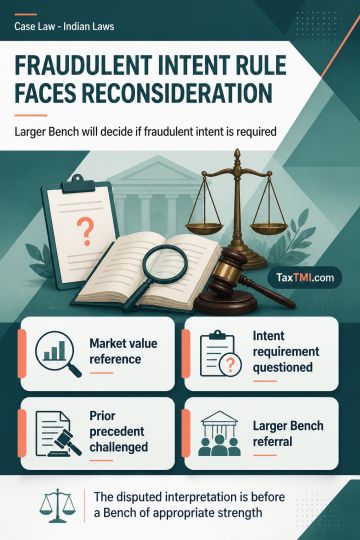
Section 47-A undervaluation threshold: fraudulent intent requirement faces reconsideration after referral to a larger Bench for authoritative resoluti...
Page of 4888
Press 'Enter' after typing page number.
1041 to 1060 of 97750 Results
❮
❯
❯❯
0 / 200
Expand Note
Add to Folder
No Folders have been created
+
Are you sure you want to delete "My most important" ?
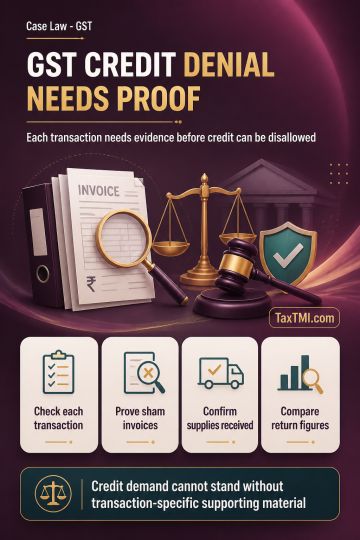
Input tax credit claimed on invoices from a supplier whose registration was retrospectively cancelled requires examination of the facts and evidence for each underlying transaction. Retrospective cancellation alone does not establish credit ineligibility unless specific material shows that invoices were fictitious or sham, or that supplies were not received. Differences between figures in GST returns, standing alone, likewise do not establish an erroneous credit claim. A demand cannot be sustained on a ground materially different from the basis of the original proceedings. Subsequent amendments in GST records may be relevant to determining limited credit eligibility.
Input tax credit claimed on invoices from a supplier whose registration was retrospectively cancelled requires examination of the facts and evidence for each underlying transaction. Retrospective cancellation alone does not establish credit ineligibility unless specific material shows that invoices were fictitious or sham, or that supplies were not received. Differences between figures in GST returns, standing alone, likewise do not establish an erroneous credit claim. A demand cannot be sustained on a ground materially different from the basis of the original proceedings. Subsequent amendments in GST records may be relevant to determining limited credit eligibility.
Note: It is a system-generated summary and is for quick reference only.
 TaxTMI
  TaxTMI
 of 4888