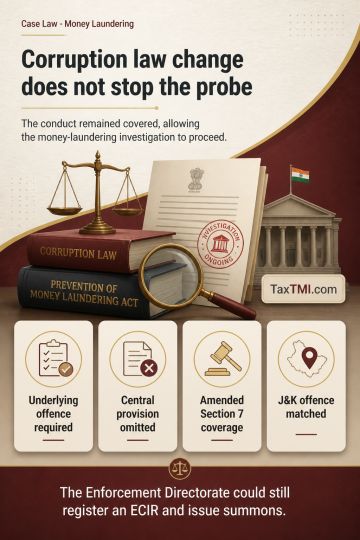
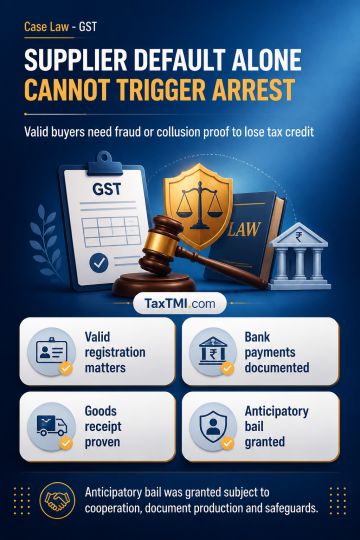
Corresponding scheduled offences preserve money-laundering jurisdiction despite repeal of the central corruption provision where conduct remains cover...
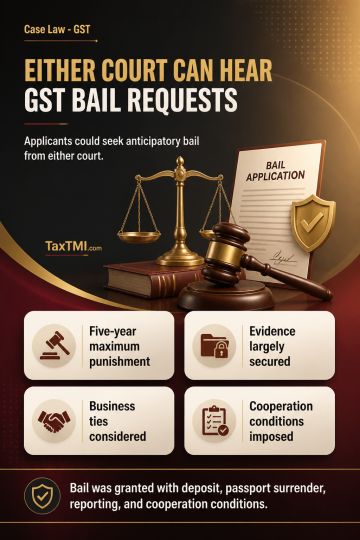
Concurrent anticipatory-bail jurisdiction permits applications before either forum, while secured evidence may negate custodial interrogation in GST e...
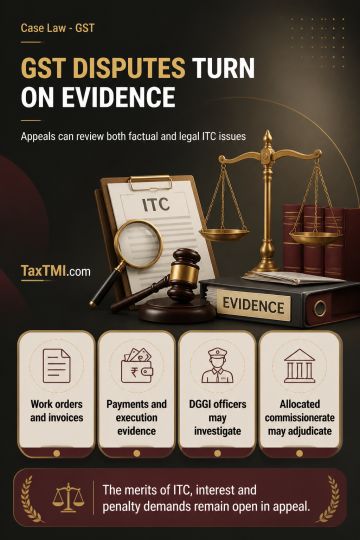
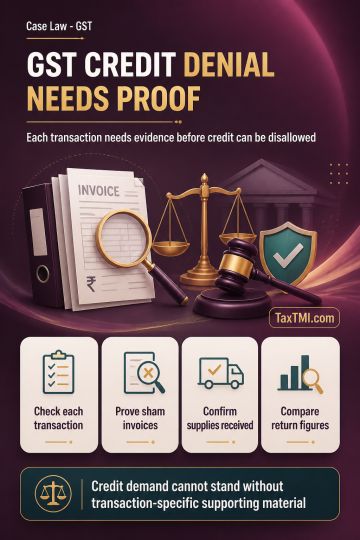
Input tax credit claimed on invoices from a supplier whose registration was retrospectively cancelled requires examination of the facts and evidence for each underlying transaction. Retrospective cancellation alone does not establish credit ineligibility unless specific material shows that invoices were fictitious or sham, or that supplies were not received. Differences between figures in GST returns, standing alone, likewise do not establish an erroneous credit claim. A demand cannot be sustained on a ground materially different from the basis of the original proceedings. Subsequent amendments in GST records may be relevant to determining limited credit eligibility.
Input tax credit claimed on invoices from a supplier whose registration was retrospectively cancelled requires examination of the facts and evidence for each underlying transaction. Retrospective cancellation alone does not establish credit ineligibility unless specific material shows that invoices were fictitious or sham, or that supplies were not received. Differences between figures in GST returns, standing alone, likewise do not establish an erroneous credit claim. A demand cannot be sustained on a ground materially different from the basis of the original proceedings. Subsequent amendments in GST records may be relevant to determining limited credit eligibility.
Note: It is a system-generated summary and is for quick reference only.
 TaxTMI
  TaxTMI
 of 4883