Capital-gains exemption for charitable trusts extends to qualifying fixed deposits, while unrecoverable TDS write-offs may constitute income applicati...
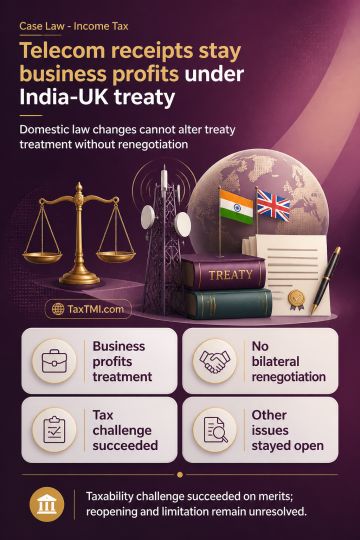
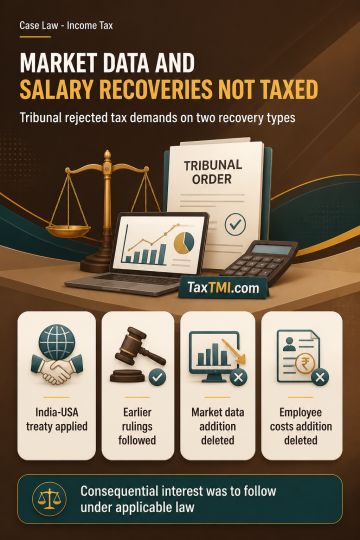
India-UK treaty characterisation of telecom-service receipts as business profits withstands unilateral domestic-law amendments for Indian tax purposes...
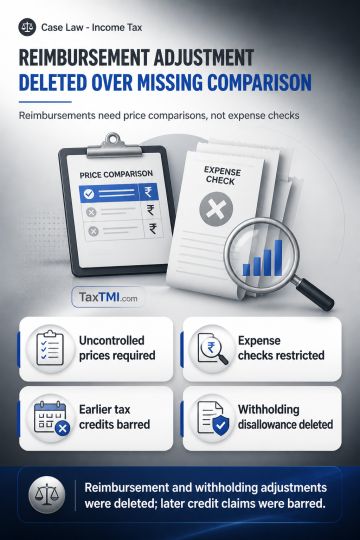
Transfer-pricing reimbursement adjustments require uncontrolled comparables and cannot become expense-genuineness reviews, resulting in deletion of th...
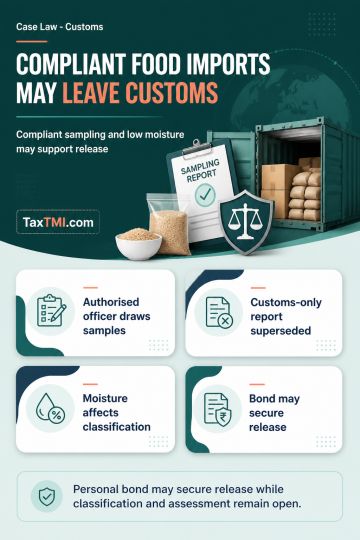
Food import sampling requirements support provisional release where unseized consignments conform to standards and raw areca classification is unestab...
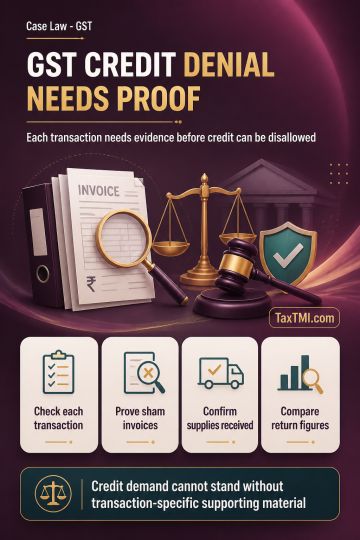
Input tax credit claimed on invoices from a supplier whose registration was retrospectively cancelled requires examination of the facts and evidence for each underlying transaction. Retrospective cancellation alone does not establish credit ineligibility unless specific material shows that invoices were fictitious or sham, or that supplies were not received. Differences between figures in GST returns, standing alone, likewise do not establish an erroneous credit claim. A demand cannot be sustained on a ground materially different from the basis of the original proceedings. Subsequent amendments in GST records may be relevant to determining limited credit eligibility.
Input tax credit claimed on invoices from a supplier whose registration was retrospectively cancelled requires examination of the facts and evidence for each underlying transaction. Retrospective cancellation alone does not establish credit ineligibility unless specific material shows that invoices were fictitious or sham, or that supplies were not received. Differences between figures in GST returns, standing alone, likewise do not establish an erroneous credit claim. A demand cannot be sustained on a ground materially different from the basis of the original proceedings. Subsequent amendments in GST records may be relevant to determining limited credit eligibility.
Note: It is a system-generated summary and is for quick reference only.
 TaxTMI
  TaxTMI
 of 4879