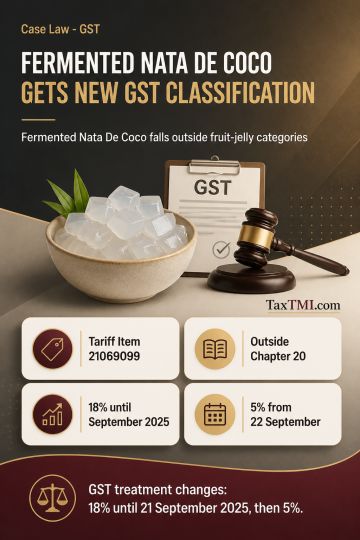
Residual food-preparation classification places fermented Nata De Coco outside fruit-jelly categories, changing its GST treatment across notified peri...
Settlement application eligibility requires a pending assessment when filed, preventing an extra prior-eligibility condition from blocking considerati...
Reassessment for unreturned property sales survives where transfer information, non-filing, and unsupported exemption claims establish a prima facie l...
Page of 4886
Press 'Enter' after typing page number.
521 to 540 of 97714 Results
❮
❯
❯❯
0 / 200
Expand Note
Add to Folder
No Folders have been created
+
Are you sure you want to delete "My most important" ?
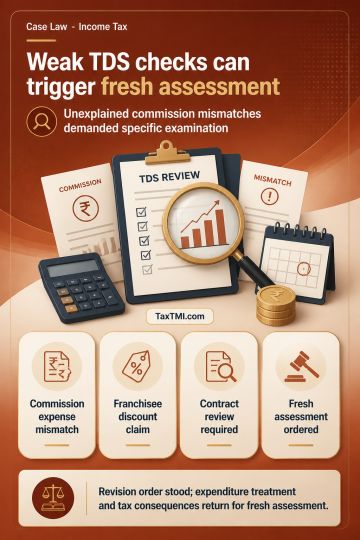
Revisionary jurisdiction for inadequate inquiry into TDS on commission and brokerage expenditure arises where the Assessing Officer merely calls for TDS details without examining a material mismatch between financial-statement expenditure and TDS reporting. A substantial increase in expenditure and a claim that amounts retained by franchisees constituted discounts rather than commission require specific examination of contractual arrangements, accounting treatment and TDS liability. Failure to conduct that inquiry may render an assessment erroneous and prejudicial to Revenue interests, rather than reflecting a prohibited change of opinion. The revisionary order was sustained, leaving the expenditure's nature and tax consequences for fresh assessment after giving the assessee an opportunity to respond.
Revisionary jurisdiction for inadequate inquiry into TDS on commission and brokerage expenditure arises where the Assessing Officer merely calls for TDS details without examining a material mismatch between financial-statement expenditure and TDS reporting. A substantial increase in expenditure and a claim that amounts retained by franchisees constituted discounts rather than commission require specific examination of contractual arrangements, accounting treatment and TDS liability. Failure to conduct that inquiry may render an assessment erroneous and prejudicial to Revenue interests, rather than reflecting a prohibited change of opinion. The revisionary order was sustained, leaving the expenditure's nature and tax consequences for fresh assessment after giving the assessee an opportunity to respond.
Note: It is a system-generated summary and is for quick reference only.
 TaxTMI
  TaxTMI
 of 4886