Mandatory textile export qualifiers distinguish flame-retardant fabrics from other listed fabrics for automated identification under the textiles ince...
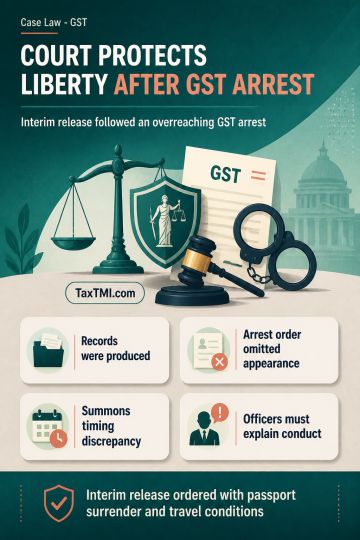
Personal liberty safeguards restrict arrest after court-directed GST appearance, requiring interim release where authorities overreach pending proceed...
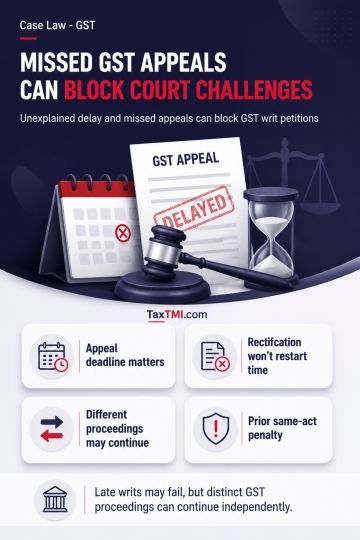
Alternative statutory remedy and delay bar GST writ challenges despite pending rectification, while distinct subject matter permits parallel proceedin...
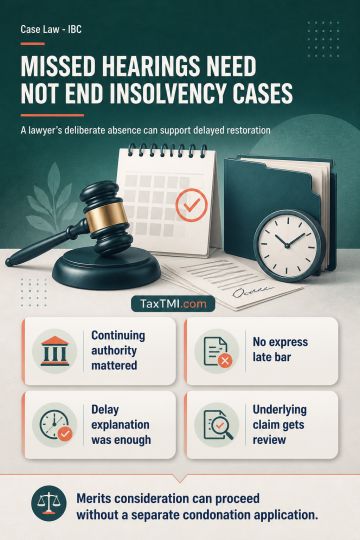
Restoration of an insolvency application dismissed for non-prosecution can be supported by sufficient cause where former counsel deliberately failed to appear or enable substitution despite a continuing vakalatnama; that default should not be attributed to the litigant. Rule 48(2) of the NCLT Rules prescribes a 30-day restoration period but does not expressly prohibit a later recall request. Section 238A applies the Limitation Act, as far as may be, to insolvency proceedings, allowing Section 5 condonation on sufficient cause. Where the restoration request itself explains the delay, a separate condonation application is unnecessary, permitting merits consideration of the underlying claim.
Restoration of an insolvency application dismissed for non-prosecution can be supported by sufficient cause where former counsel deliberately failed to appear or enable substitution despite a continuing vakalatnama; that default should not be attributed to the litigant. Rule 48(2) of the NCLT Rules prescribes a 30-day restoration period but does not expressly prohibit a later recall request. Section 238A applies the Limitation Act, as far as may be, to insolvency proceedings, allowing Section 5 condonation on sufficient cause. Where the restoration request itself explains the delay, a separate condonation application is unnecessary, permitting merits consideration of the underlying claim.
Note: It is a system-generated summary and is for quick reference only.
 TaxTMI
  TaxTMI
 of 4878