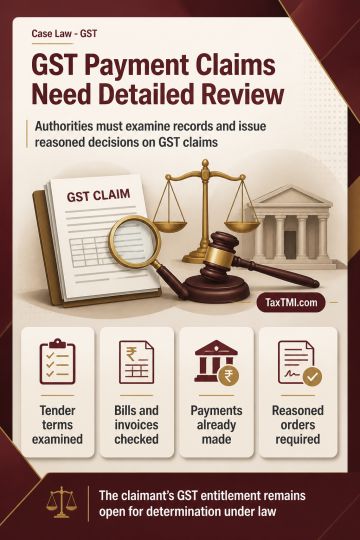
GST payment representations require record-based, reasoned decisions while substantive entitlement remains open for determination by competent authori...
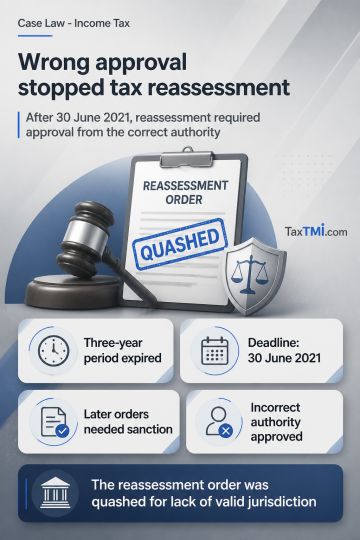
Reassessment sanction under extended limitation required approval from the competent specified authority, invalidating proceedings approved by an inco...
Internal CUP benchmarking for fixed-rate Masala Bonds prevails over floating external comparables, eliminating the related transfer-pricing adjustment...
Jurisdictional validity of revision notices: incorrect official capacity and mere change of opinion invalidate revision of property income assessments...
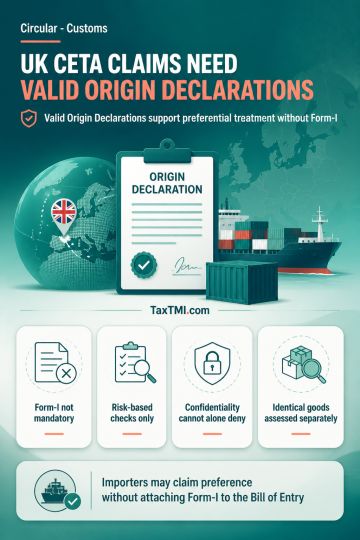
Rules of Origin under a trade agreement prevail over CAROTAR, 2020 where inconsistent. For preferential imports under the India-UK CETA, a valid Origin Declaration from the UK exporter or producer is sufficient proof of origin; Form-I is neither required with the Bill of Entry nor a condition for preferential tariff treatment. Form-I information may be sought only where risk-based origin checks are triggered and the proper officer has reason to believe origin criteria are unmet. Failure to provide exporter or producer confidential information cannot alone deny preference, and insufficient information may be verified through the exporting party's Verification Authority. Earlier adverse origin determinations apply to later imports only when goods are genuinely identical, subject to importer submissions and independent assessment of materially different goods.
Rules of Origin under a trade agreement prevail over CAROTAR, 2020 where inconsistent. For preferential imports under the India-UK CETA, a valid Origin Declaration from the UK exporter or producer is sufficient proof of origin; Form-I is neither required with the Bill of Entry nor a condition for preferential tariff treatment. Form-I information may be sought only where risk-based origin checks are triggered and the proper officer has reason to believe origin criteria are unmet. Failure to provide exporter or producer confidential information cannot alone deny preference, and insufficient information may be verified through the exporting party's Verification Authority. Earlier adverse origin determinations apply to later imports only when goods are genuinely identical, subject to importer submissions and independent assessment of materially different goods.
Note: It is a system-generated summary and is for quick reference only.
 TaxTMI
  TaxTMI
 of 4888