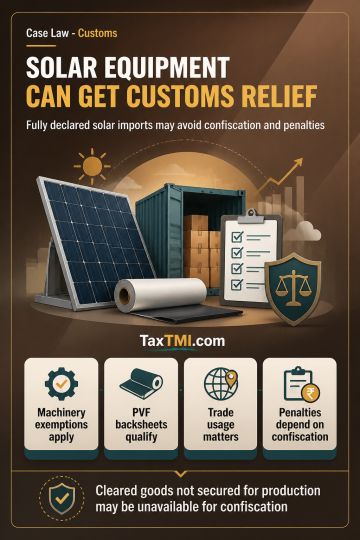
Customs exemptions cover photovoltaic assembly machinery and PVF backsheets, while fully declared cleared imports may avoid confiscation and penalties...
Specific tariff classification for LCD devices overrides treatment as electricity-meter parts, defeating differential duty, extended limitation, and p...
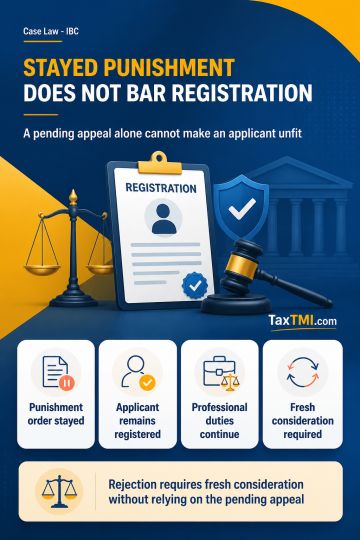
Stayed disciplinary punishment does not establish unfitness for insolvency professional registration; reconsideration must disregard mere pendency of ...
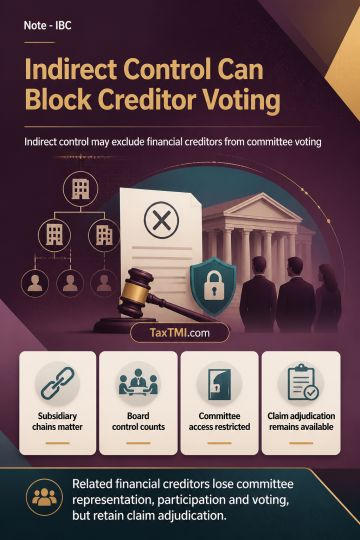
Indirect corporate control can create related-party status, excluding financial creditors from Committee of Creditors representation, participation an...
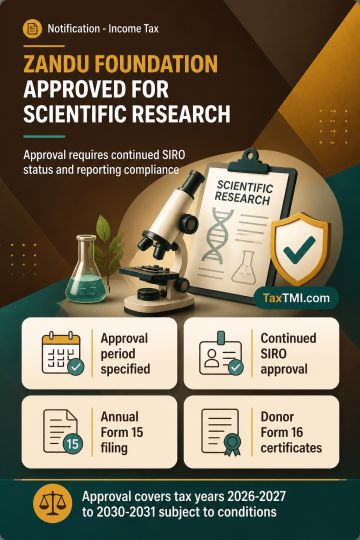
Scientific research association approval requires continuing SIRO status, annual donation reporting, and donor certificates for the approved foundatio...
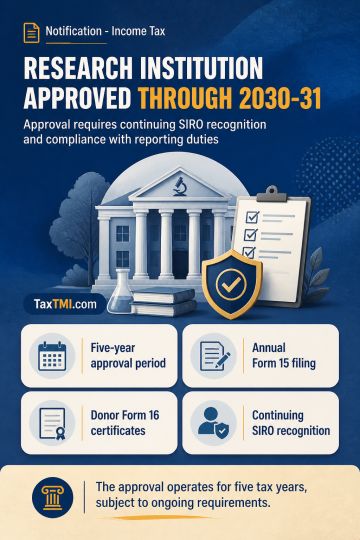
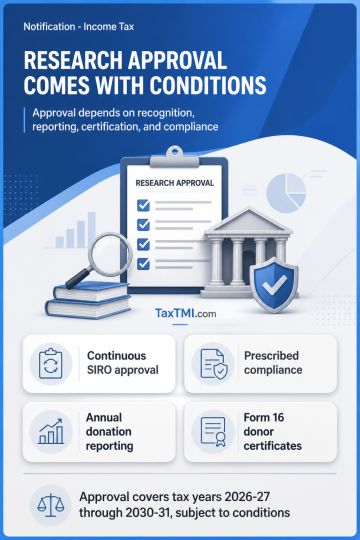
Scientific research institution approval is conditional on SIRO recognition, annual donation reporting, donor certification, and prescribed compliance...
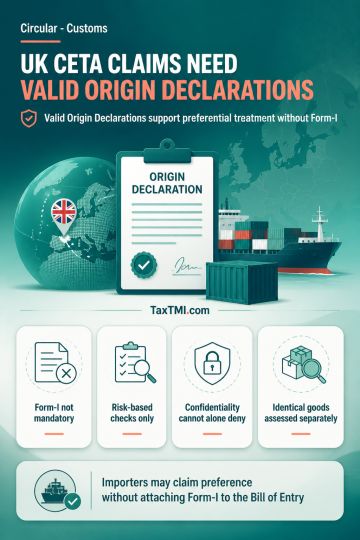
Rules of Origin under a trade agreement prevail over CAROTAR, 2020 where inconsistent. For preferential imports under the India-UK CETA, a valid Origin Declaration from the UK exporter or producer is sufficient proof of origin; Form-I is neither required with the Bill of Entry nor a condition for preferential tariff treatment. Form-I information may be sought only where risk-based origin checks are triggered and the proper officer has reason to believe origin criteria are unmet. Failure to provide exporter or producer confidential information cannot alone deny preference, and insufficient information may be verified through the exporting party's Verification Authority. Earlier adverse origin determinations apply to later imports only when goods are genuinely identical, subject to importer submissions and independent assessment of materially different goods.
Rules of Origin under a trade agreement prevail over CAROTAR, 2020 where inconsistent. For preferential imports under the India-UK CETA, a valid Origin Declaration from the UK exporter or producer is sufficient proof of origin; Form-I is neither required with the Bill of Entry nor a condition for preferential tariff treatment. Form-I information may be sought only where risk-based origin checks are triggered and the proper officer has reason to believe origin criteria are unmet. Failure to provide exporter or producer confidential information cannot alone deny preference, and insufficient information may be verified through the exporting party's Verification Authority. Earlier adverse origin determinations apply to later imports only when goods are genuinely identical, subject to importer submissions and independent assessment of materially different goods.
Note: It is a system-generated summary and is for quick reference only.
 TaxTMI
  TaxTMI
 of 4879