Reassessment for unreturned property sales survives where transfer information, non-filing, and unsupported exemption claims establish a prima facie l...
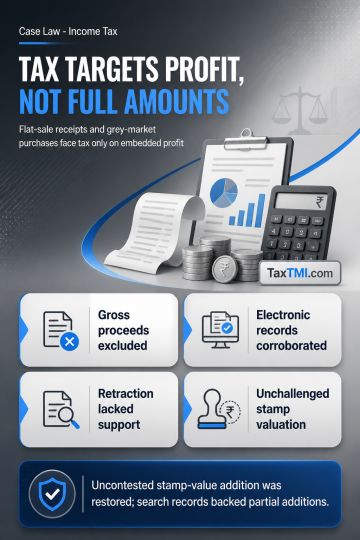
Profit-element taxation limits additions for unaccounted flat-sale receipts and grey-market purchases, while reliable search records support partial a...
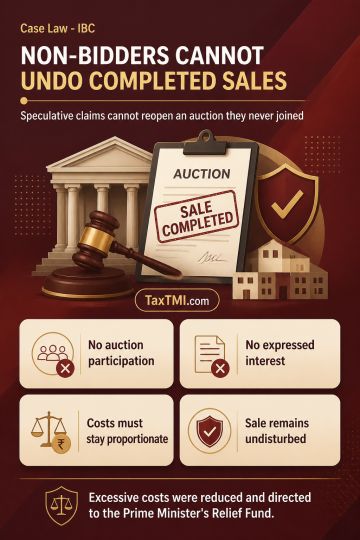
Non-participating bidders cannot disturb concluded liquidation sales on speculative prejudice, while costs for such challenges must remain proportiona...
First-motion scrutiny of a listed-company amalgamation scheme is generally confined to legality and public interest, leaving shareholders and creditors to assess the commercial proposal. An ante-dated appointed date requires justification, but its assessment must account for the regulatory and stock-exchange approval process applicable to listed entities. Delay in filing cannot be attributed to the company unless exclusively caused by its failure or default; valuation effects and delay may be examined at the second stage with regulatory and tax-authority input. The first-motion dismissal was set aside, and meetings were directed to be convened through appointment of a chairman and scrutinizers.
First-motion scrutiny of a listed-company amalgamation scheme is generally confined to legality and public interest, leaving shareholders and creditors to assess the commercial proposal. An ante-dated appointed date requires justification, but its assessment must account for the regulatory and stock-exchange approval process applicable to listed entities. Delay in filing cannot be attributed to the company unless exclusively caused by its failure or default; valuation effects and delay may be examined at the second stage with regulatory and tax-authority input. The first-motion dismissal was set aside, and meetings were directed to be convened through appointment of a chairman and scrutinizers.
Note: It is a system-generated summary and is for quick reference only.
 TaxTMI
  TaxTMI
 of 4888