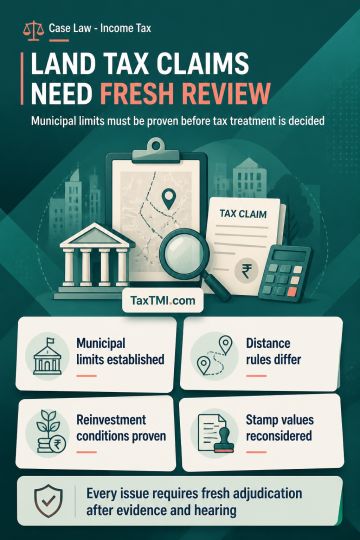
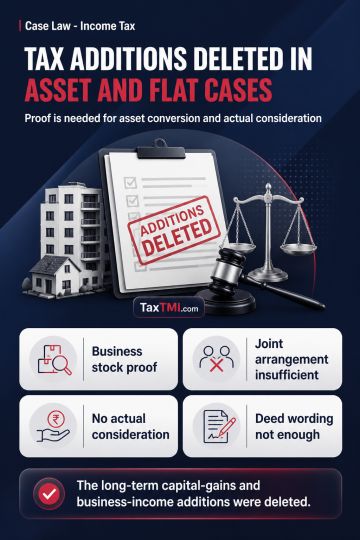
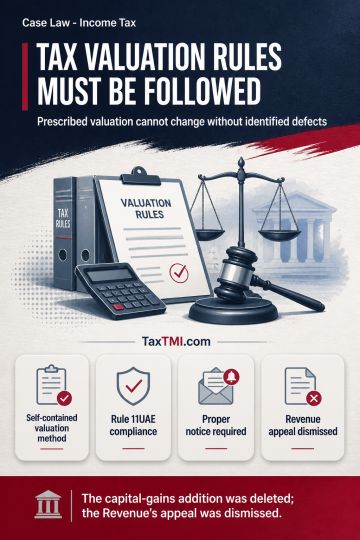
Capital Asset Conversion Requires Proven Business Stock Treatment; Paper Consideration in Spousal Flat Transfers Does Not Create Taxable Business Inco...
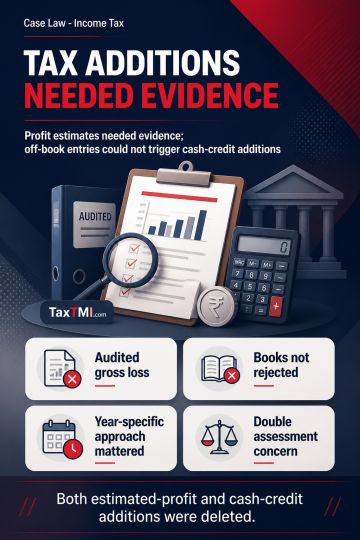
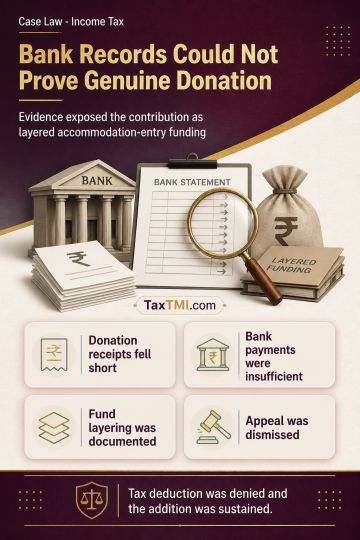
Human-probability test defeats political donation deduction where banking records mask accommodation-entry fund layering and evidence shows non-genuin...
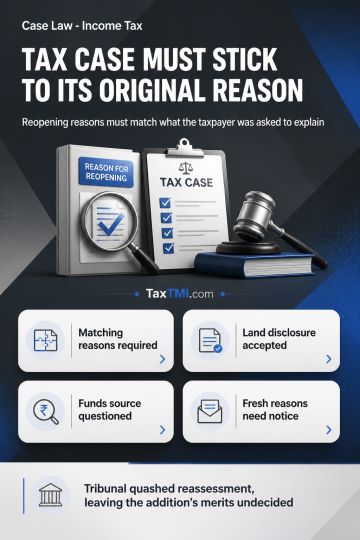
Commercial property status protects capital-gains exemption when residential-house ownership limits are tested, while agricultural-land character gove...
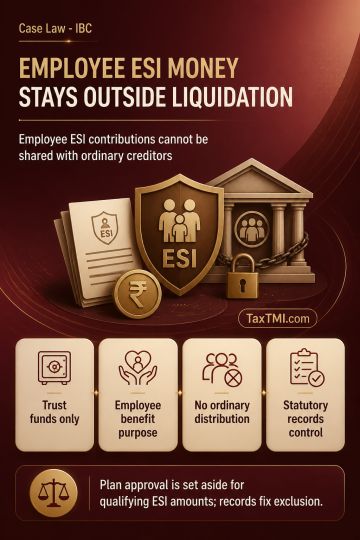
Statutory ESI contributions, including amounts deducted from employees' wages, are trust funds held by the corporate debtor for statutory beneficiaries and do not beneficially belong to it. Their filing as a Form B claim is procedural and neither changes their trust character nor prevents ESIC from seeking exclusion. These contributions must remain outside the liquidation estate and cannot be distributed through the creditor waterfall as ordinary Government or operational creditor dues. Resolution-plan approval is set aside to the extent it treats qualifying ESI contributions as ordinary dues; the excluded amount must be determined from statutory records.
Statutory ESI contributions, including amounts deducted from employees' wages, are trust funds held by the corporate debtor for statutory beneficiaries and do not beneficially belong to it. Their filing as a Form B claim is procedural and neither changes their trust character nor prevents ESIC from seeking exclusion. These contributions must remain outside the liquidation estate and cannot be distributed through the creditor waterfall as ordinary Government or operational creditor dues. Resolution-plan approval is set aside to the extent it treats qualifying ESI contributions as ordinary dues; the excluded amount must be determined from statutory records.
Note: It is a system-generated summary and is for quick reference only.
 TaxTMI
  TaxTMI
 of 4879