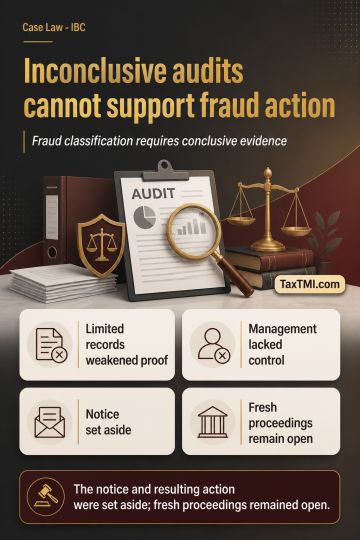
Fraud classification show-cause notices founded on inconclusive forensic audit material cannot sustain action, permitting fresh proceedings on conclus...
Appellate enhancement limits protect against new income sources, while documented credits and prior-year investments resist unexplained-income additio...
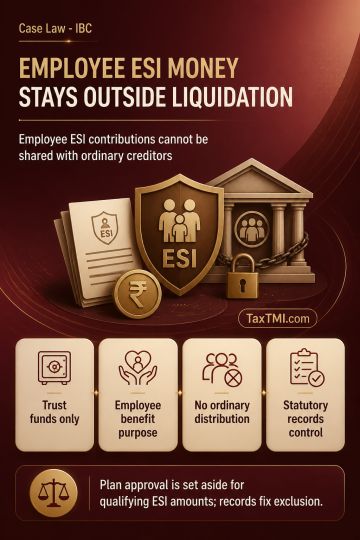
Statutory ESI contributions, including amounts deducted from employees' wages, are trust funds held by the corporate debtor for statutory beneficiaries and do not beneficially belong to it. Their filing as a Form B claim is procedural and neither changes their trust character nor prevents ESIC from seeking exclusion. These contributions must remain outside the liquidation estate and cannot be distributed through the creditor waterfall as ordinary Government or operational creditor dues. Resolution-plan approval is set aside to the extent it treats qualifying ESI contributions as ordinary dues; the excluded amount must be determined from statutory records.
Statutory ESI contributions, including amounts deducted from employees' wages, are trust funds held by the corporate debtor for statutory beneficiaries and do not beneficially belong to it. Their filing as a Form B claim is procedural and neither changes their trust character nor prevents ESIC from seeking exclusion. These contributions must remain outside the liquidation estate and cannot be distributed through the creditor waterfall as ordinary Government or operational creditor dues. Resolution-plan approval is set aside to the extent it treats qualifying ESI contributions as ordinary dues; the excluded amount must be determined from statutory records.
Note: It is a system-generated summary and is for quick reference only.
 TaxTMI
  TaxTMI
 of 4878