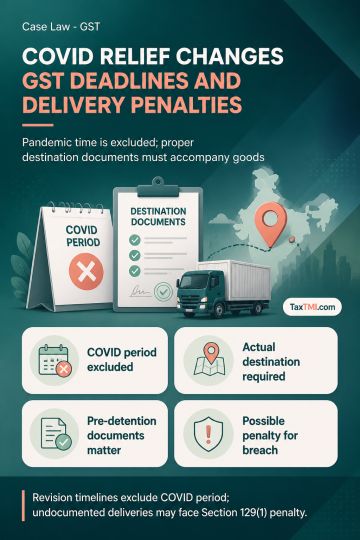
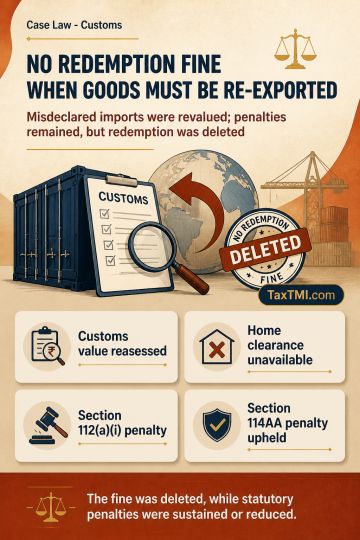
COVID-19 limitation exclusion and destination-specific e-way bills govern revisional timelines and penalties for undocumented third-party plywood deli...
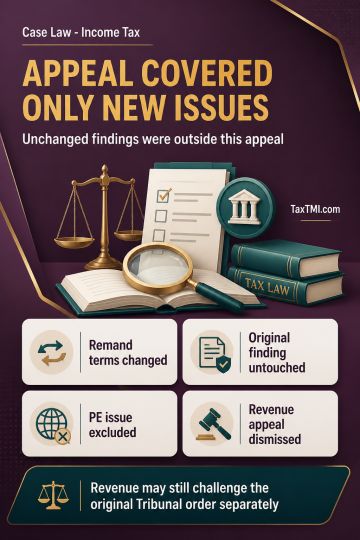
Questions arising from miscellaneous application orders cannot challenge unaltered Tribunal findings, leaving the original order separately challengea...
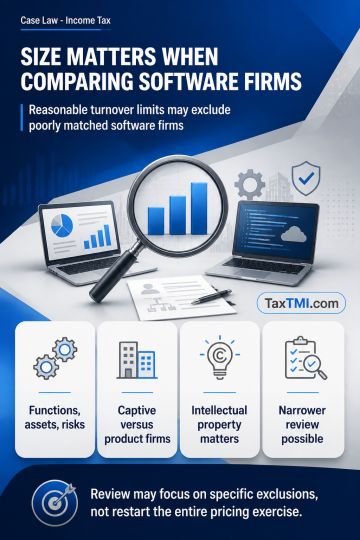
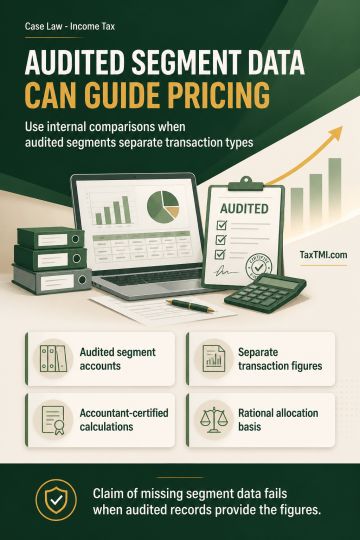
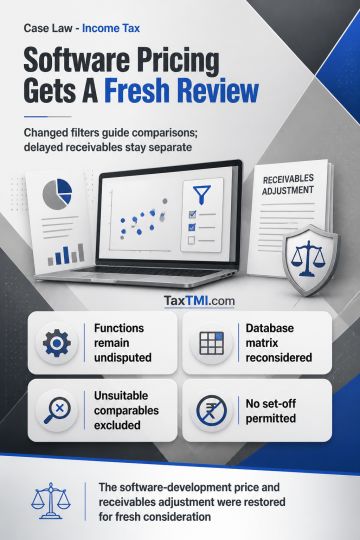
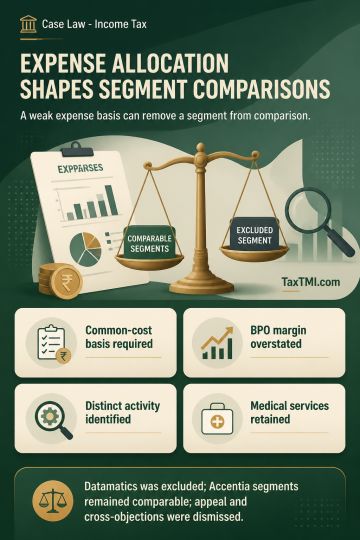
Transfer-pricing comparability filters require fresh arm's-length analysis, while delayed receivables need separate reconsideration with working-capit...
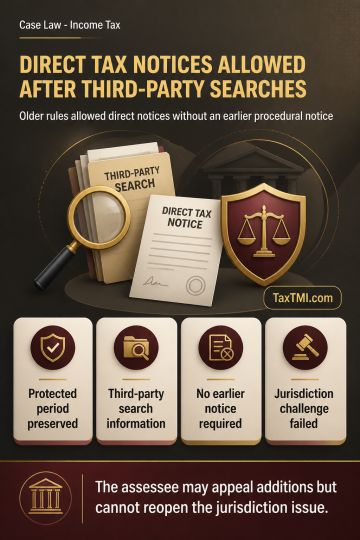
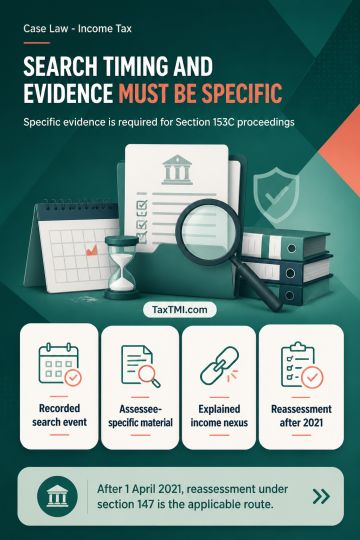
Section 153C jurisdiction requires timely deemed search and assessee-specific satisfaction material; otherwise reassessment must use the proper statut...
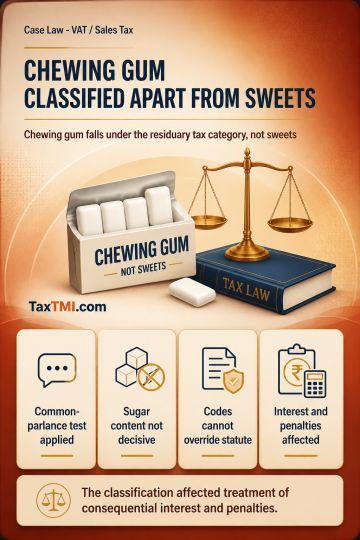
Chewing gum is classified as unclassified goods under residuary Entry 87 of Schedule II to the Gujarat Value Added Tax Act, 2003, rather than as "sweets and sweetmeats" under Entry 74A. Applying the common-parlance test and the Supreme Court position that chewing gum or bubble gum is chewed and discarded rather than eaten, its sugar content does not make it a sweetmeat. Commodity codes used for e-services and prior departmental treatment cannot override statutory classification. As no specific entry covers chewing gum, the residuary entry applies; the contrary classification also affected the treatment of consequential interest and penalties.
Chewing gum is classified as unclassified goods under residuary Entry 87 of Schedule II to the Gujarat Value Added Tax Act, 2003, rather than as "sweets and sweetmeats" under Entry 74A. Applying the common-parlance test and the Supreme Court position that chewing gum or bubble gum is chewed and discarded rather than eaten, its sugar content does not make it a sweetmeat. Commodity codes used for e-services and prior departmental treatment cannot override statutory classification. As no specific entry covers chewing gum, the residuary entry applies; the contrary classification also affected the treatment of consequential interest and penalties.
Note: It is a system-generated summary and is for quick reference only.
 TaxTMI
  TaxTMI
 of 4881