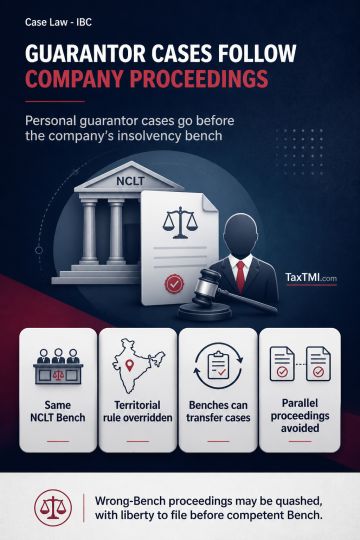
Personal guarantor insolvency jurisdiction follows the corporate debtor's CIRP Bench, enabling inter-territorial transfer and preventing parallel proc...
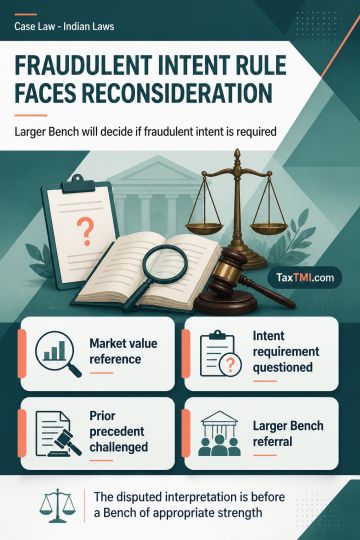
Section 47-A undervaluation threshold: fraudulent intent requirement faces reconsideration after referral to a larger Bench for authoritative resoluti...
RBI supersession powers over multi-State co-operative banks operate independently of the constitutional six-month ceiling and permit statutory extensi...
Penalty for deemed income based solely on stamp-duty valuation is not justified where the taxpayer disclosed the registered deed, bank statements and payment details, and there is no finding that actual consideration exceeded the stated amount or that disclosures were false. Although statutory substitution of stamp-duty value can support an assessment addition, it does not alone establish concealment or inaccurate particulars, and the conditions for penalty are not met where the explanation is not found false. Acceptance of the addition does not admit that the stated consideration was untrue. Conversely, a notice expressly alleging concealment provides a specific charge when the penalty rests on that same allegation.
Penalty for deemed income based solely on stamp-duty valuation is not justified where the taxpayer disclosed the registered deed, bank statements and payment details, and there is no finding that actual consideration exceeded the stated amount or that disclosures were false. Although statutory substitution of stamp-duty value can support an assessment addition, it does not alone establish concealment or inaccurate particulars, and the conditions for penalty are not met where the explanation is not found false. Acceptance of the addition does not admit that the stated consideration was untrue. Conversely, a notice expressly alleging concealment provides a specific charge when the penalty rests on that same allegation.
Note: It is a system-generated summary and is for quick reference only.
 TaxTMI
  TaxTMI
 of 4886