Coercive recovery during GST searches is restrained pending scrutiny, preserving normal business operations and requiring adherence to investigation g...
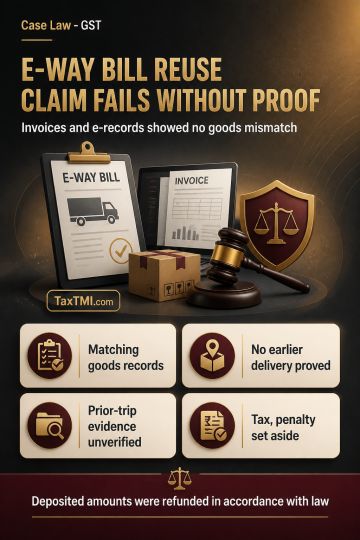
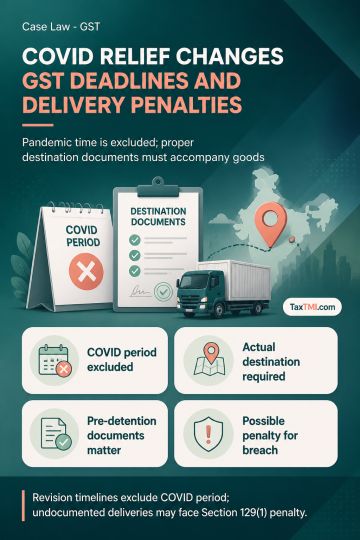
COVID-19 limitation exclusion and destination-specific e-way bills govern revisional timelines and penalties for undocumented third-party plywood deli...
Questions arising from miscellaneous application orders cannot challenge unaltered Tribunal findings, leaving the original order separately challengea...
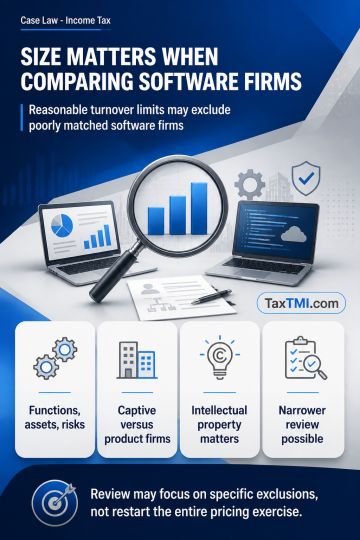
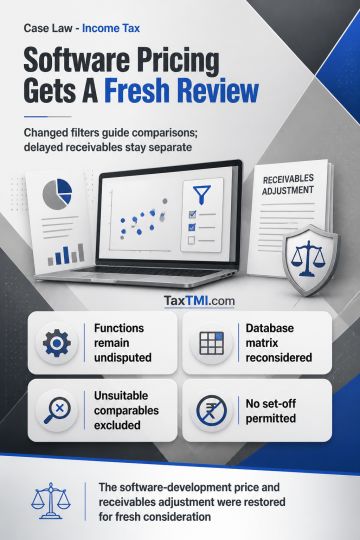
Transfer-pricing comparability filters require fresh arm's-length analysis, while delayed receivables need separate reconsideration with working-capit...
Page of 4879
Press 'Enter' after typing page number.
421 to 440 of 97567 Results
❮
❯
❯❯
0 / 200
Expand Note
Add to Folder
No Folders have been created
+
Are you sure you want to delete "My most important" ?
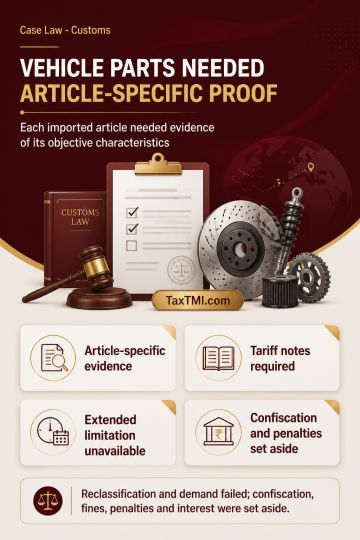
Revenue must establish tariff reclassification through evidence of each imported article's objective characteristics, applicable tariff entries, Section Notes and Explanatory Notes; representative sampling, undisclosed website material and unreasoned end-use assertions were insufficient. The proposed reclassification and consequential denial of concessional duty failed. Extended limitation required pleaded and proven collusion, wilful misstatement or suppression; a corrigendum could not add new articles or bills of entry, and charges first introduced through it ran from its date. The extended-period demand was unavailable. Duty determination had to reconcile annexures and appropriate verified payments, so the unreconciled demand failed. Incorrect tariff classification without false description or exemption breach did not justify confiscation, redemption fine, penalty or consequential interest; these were set aside, subject to any timely verified residual short-payment determination.
Revenue must establish tariff reclassification through evidence of each imported article's objective characteristics, applicable tariff entries, Section Notes and Explanatory Notes; representative sampling, undisclosed website material and unreasoned end-use assertions were insufficient. The proposed reclassification and consequential denial of concessional duty failed. Extended limitation required pleaded and proven collusion, wilful misstatement or suppression; a corrigendum could not add new articles or bills of entry, and charges first introduced through it ran from its date. The extended-period demand was unavailable. Duty determination had to reconcile annexures and appropriate verified payments, so the unreconciled demand failed. Incorrect tariff classification without false description or exemption breach did not justify confiscation, redemption fine, penalty or consequential interest; these were set aside, subject to any timely verified residual short-payment determination.
Note: It is a system-generated summary and is for quick reference only.
 TaxTMI
  TaxTMI
 of 4879